

PRODUCT DETAILS
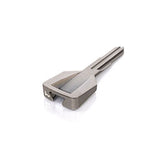
Synchrotech Synchro Sleeves - K-Series (RSX, TSX & Civic Si)
If your transmission pops out of gear, this is the part you need. Not the synchros, the sleeve. It's a distinction a lot of people miss, and it means the difference between fixing your problem and pulling the transmission apart twice. These are Synchrotech's replacement synchro sleeves for K-series transmissions, sold individually so you can replace just the one that's worn instead of buying a full master kit.
Grinding Means Synchros. Popping Out Means Sleeves.
This is the most useful thing on this page, so start here. Those two symptoms point at two different parts.
A grind going into gear means a synchro isn't matching speeds fast enough. That's a synchro problem.
A gear that pops out, especially under acceleration or deceleration, means the sleeve isn't holding. That's this part. Here's why it happens: the teeth on the sleeve and the engagement teeth on the gear are cut with a slight angle, called a reverse taper or undercut. That geometry is doing something clever, because under load it actually pulls the sleeve tighter onto the gear and locks it there. Once that taper wears round, the sleeve loses its grip and torque pushes it right back out. You get a shifter that snaps to neutral on its own while the engine revs out, which is both maddening and genuinely unsafe.
If your car does both, grinds going in and won't stay in, you likely need synchros and sleeves for that gear pair.
That second one is what brings people to this page. The teeth on the sleeve and the engagement teeth on the gear are cut with a slight angle called a reverse taper, and under load that geometry actually pulls the sleeve tighter onto the gear to lock it in. Once the taper wears round, the sleeve loses its grip and torque pushes it right back out.
What A Sleeve Actually Does
Worth understanding, because it explains why it wears. All the forward gears in your transmission spin constantly on the shaft, even in neutral. When you shift, you're not moving a gear, you're sliding a splined sleeve sideways onto the gear you selected. The sleeve is keyed to the hub and the hub is keyed to the shaft, so once the sleeve locks onto the gear, drive goes through. It's the part doing the actual engaging every single time you shift, which is exactly why it's a wear item on a hard-driven car.
Three Sleeves Per Transmission
Each sleeve handles a pair of gears, so a complete transmission uses three of them: one for 1st and 2nd, one for 3rd and 4th, and one for 5th and 6th. They're sold individually here on purpose, since sleeves rarely wear evenly. If 3rd is the gear popping out, you buy the 3/4 sleeve and leave the others alone.
Inspect Before You Order
Since you're already in there, look at the whole picture rather than just the sleeve. Check the engagement teeth on the gear itself, because a worn sleeve and worn gear teeth usually happen together, and a new sleeve on rounded-off gear teeth will still pop out. Check your shift fork too. Honda gives service limits for fork-to-sleeve clearance, and a bent or worn fork won't push the sleeve far enough to fully engage, which produces the same symptom. Replacing a sleeve while ignoring a worn fork means doing this again.
How To Stop Wearing Them Out
One habit worth breaking, because it's the main thing that kills sleeves and forks. Don't rest your hand on the shifter while you're driving, and don't hold pressure on the lever after a gear is engaged. That sleeve is spinning constantly, and any pressure you put on the shifter presses the fork fingers against it the whole time. Honda's clearance spec between the fork and sleeve is measured in fractions of a millimeter, so it doesn't take much to wear past it. Shift, let go, and your next set will last a lot longer.
Fits These K-Series Transmissions
| Make | Model | Years |
|---|---|---|
| Acura | RSX | 2002-2006 |
| Acura | TSX | 2004-2008 |
| Honda | Civic Si (EP3) | 2002-2005 |
| Honda | Civic Si | 2006-2011 |
| Honda | Civic Si | 2012-2015 |
Select the sleeve that matches the gear pair you're replacing.
Who Should Grab A Sleeve
This is for anyone with a gear that won't stay engaged, or a builder going through a transmission who's found a sleeve past its service limit. Buying individually means you fix what's actually worn instead of spending master-kit money on parts that are still good. If you're finding wear everywhere, the master rebuild kit is the better value, but for a single bad gear pair, this is the part.
Fits: 2002-2006 Acura RSX, 2004-2008 Acura TSX, 2002-2005 Honda Civic Si (EP3), 2006-2011 Honda Civic Si, and 2012-2015 Honda Civic Si. Sold: individually. Coverage: 1st/2nd, 3rd/4th, and 5th/6th, three sleeves total per transmission.
2013-2015 Acura ILX
2002-2006 Acura RSX Type S/Type R
2004-2008 Acura TSX
2003-2007 Honda Accord
2002-2005 Honda Civic Si/Type R
2006-2011 Honda Civic Si/Type R
2012-2015 Honda Civic Si