
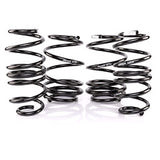


Product images 1 / 2


Description
Progress Technology Series II Competition Coilovers for 89-91 Honda Civic / CRX (EF)
Thirty-five years on, most EF Civics and CRXs are riding on worn-out shocks, sagging springs, or a mix of parts from three different owners. The car wallows over dips, floats at highway speed, and leans hard in a corner. Swapping in a B- or K-series makes it worse, since the heavier engine pushes the front springs even lower. That's why the stance and handling of a swapped EF so often feel off. You need springs matched to the weight in the nose, and shocks that can control them.
Progress's Series II Competition coilovers give you both. They have redesigned damping, adjustable ride height, and a range of spring rates matched to what's under the hood. You can lower the car 1 to 3 inches front and rear. For a daily driver, pick a softer rate. For autocross and track days, go stiffer. If your EF has a swap, there's a rate built for that weight. Choosing the right rate matters more than anything else on this page, so read the guide below before you order.
Choosing a Spring Rate (Front/Rear)
For D-series cars:
- 350/250: the comfortable daily choice. Lower it too far and it can bottom out over big dips.
- 350/350: more balanced, with less understeer. On the short-wheelbase hatch and CRX, it can feel a little choppy over bumps.
- 350/450 or 350/550: quick turn-in and very little body roll. Fun to drive, but rough on broken pavement.
For B-series and K-series swaps:
- 450/450: balanced, with less roll and more grip. A good all-around choice for a swapped street car.
- 550/550: sharp steering and strong grip, and it holds up well to drag launches.
- 550/650: very stiff. Best for a track car on wide, sticky tires or one with aero. Expect a hard ride.
A stiffer rear than front helps the car rotate instead of understeering, but it'll be livelier when you lift mid-corner. If you're not sure, go one step softer than you think. A car that's too stiff for your roads is no fun to drive.
Foam Bump Stops
Series II uses modern foam-type bump stops instead of hard rubber. They firm up gradually as they compress. When you hit a big dip, the suspension slows down progressively instead of slamming into the stop. That makes a big difference on a lowered EF, where you'll reach the bump stops more often than on a stock-height car. The ride stays more controlled over rough roads, and the car doesn't get unsettled mid-corner.
Install Notes
The kit reuses your factory top hats, which aren't included. On a car this age, check them before you start. If the rubber is cracked or the metal is rusted, replace them now while everything's apart. Rough in the ride height on the bench first, then install and torque everything with the car on its wheels. Let the springs settle for a few drives, recheck the height, and get an alignment. Don't go so low that the tires rub or the suspension sits on the bump stops all the time. Progress backs the kit with a one-year limited warranty.
Fitment
- 1989-1991 Honda Civic (EF), all trims
- 1989-1991 Honda CRX (EF), including the CRX Si
- D-series, B-series, and K-series powered cars (choose spring rates to match)
- Reuses factory top hats (not included)
FITMENT
1988-1991 Honda CRX
1988-1991 Honda Civic