


PRODUCT DETAILS
PRL Motorsports Subframe Reinforcement Collars - Civic & Integra
Honda leaves 2mm of slack around your subframe bolts. The mounting holes are 2mm larger than the bolts that pass through them, which lets the subframe shift under load. Since your suspension and steering all mount off that subframe, any movement there shows up as vagueness in how the car responds. These collars fill that gap precisely, so the subframe stays put.
Why Honda Leaves The Gap
Worth understanding, because it's deliberate rather than an oversight.
The oversized holes make assembly easier on the production line, since a 2mm margin means the subframe drops into place without fighting perfect alignment. It also allows a little compliance, which Honda tunes for comfort and to keep vibration out of the cabin.
That's a reasonable set of priorities for a car built for everyone. It's the wrong set if you're chasing steering sharpness, because that same slack lets the subframe move exactly when you're loading it hardest.
What The Slack Costs You
The movement is small, but its effect isn't.
Everything that steers and suspends the car bolts to the subframe. When the subframe shifts within that 2mm of play, your suspension geometry moves with it, momentarily, right in the middle of a corner or under hard braking.
What you feel is vagueness. Steering that responds a beat late, a limit that feels softer than it should, and sometimes rattles or vibration as the subframe takes up the slack. It's subtle enough that people live with it without knowing it's there, the same way they do with worn steering rack bushings.
The Fix Is Precise
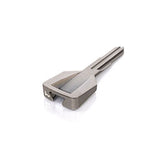
The collars fill the 2mm gap exactly, sleeving the space between the bolt and the hole.
With the gap closed, the subframe can't shift. It's clamped in a fixed position, which means your suspension geometry stays where it was designed to be through the whole corner rather than moving under load. The result is sharper steering response, a more defined limit, and less vibration reaching the cabin.
This is one of the cheapest genuine handling improvements available on these cars, because it's fixing looseness rather than changing a spring rate or a bushing durometer. You're removing slack the car should never have had.
Machined 6061, Anodized
The collars are machined from 6061 aluminum and black anodized. That matters because they have to fit the 2mm gap precisely, which requires tight machining tolerances, and they have to survive underneath the car indefinitely.
Aluminum handles that environment well, and the anodizing resists corrosion where they're exposed to road salt and water. Fit them once and they stay effective.
No Comfort Penalty Worth Worrying About
Worth addressing, since rigid suspension parts often trade comfort for precision.
Locating the subframe firmly does let slightly more vibration through than the factory slack allowed, since some of that gap was there to isolate the cabin. But it's minor, and it's the good kind of feedback, the road talking to you rather than harshness for its own sake.
On a car being set up for handling, that's a trade almost everyone makes gladly. It's nothing like the NVH increase a spherical bearing or solid mount introduces.
Pairs With The Chassis Braces
Worth knowing if you're serious about tightening up the chassis, because these two work on the same problem from different angles.
The collars stop the subframe shifting within its mounting holes. The PRL chassis braces tie the larger structure together so the chassis itself flexes less under load. One removes slack at the mounting points, the other stiffens the platform those points are attached to.
Run both and you've addressed chassis movement comprehensively rather than partially. Either is a real improvement on its own, but together they're how you get the tightest, most responsive front end these cars will give you.
Match Your Generation
The 10th and 11th gen use different subframes, so the collars aren't interchangeable. Order the kit for your chassis.
| Part Number | Fits |
|---|---|
| HC10-SRS | 2016-2021 Honda Civic (Sport, Si) and 2017-2021 Civic Type R (FK8) |
| HC11-SRS | 2022-2026 Honda Civic (Si, Sport), 2023-2026 Civic Type R (FL5), 2023-2026 Acura Integra (Base, A-Spec), 2024-2026 Integra Type S (DE5) |
Fitment
2016-2021 Honda Civic Sport and Si
2017-2021 Honda Civic Type R (FK8)
2022-2026 Honda Civic Si and Sport
2023-2026 Honda Civic Type R (FL5)
2023-2026 Acura Integra Base and A-Spec
2024-2026 Acura Integra Type S (DE5)
Select your chassis at checkout.
Who Should Run These
This is for the owner who's chasing steering precision and would rather fix looseness than add stiffness, and for anyone setting a car up for track or autocross where response matters. It's inexpensive, it's a genuine handling improvement, and it addresses slack the car came with rather than a wear item. Fit them and feel the front end sharpen up.
Fits: see the table above. Part numbers: HC10-SRS (16-21 Civic / FK8) and HC11-SRS (22-26 Civic / FL5 / Integra / DE5). Function: fills the 2mm factory subframe bolt gap to eliminate slack. Construction: machined 6061 aluminum, black anodized. Benefits: sharper steering response, increased chassis rigidity, reduced vibration under load. Pairs with: PRL chassis braces.
2023-2026 Acura Integra Base/ASpec
2024-2026 Acura Integra Type S
2016-2021 Honda Civic Sport/Si
2017-2021 Honda Civic Type R
2022-2026 Honda Civic Si/Sport
2023-2026 Honda Civic Type R