

PRODUCT DETAILS
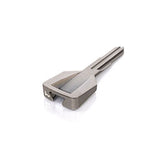
Hybrid Racing Clutch Slave Cylinder (HYB-SLV-01-12) - K-Series
Honda put a clutch delay valve in a lot of K-series slave cylinders, and it does exactly what the name says. It slows down how quickly your clutch can engage, which Honda did to protect the drivetrain from abrupt inputs. What it feels like from the driver's seat is a clutch that doesn't do what your foot told it to, particularly when you're shifting quickly. This slave cylinder eliminates it.
What The Delay Valve Actually Does To You
Worth understanding, because a lot of people spend years blaming their shifter, their cables, or themselves for something the slave cylinder is causing.
The delay valve restricts hydraulic flow when you release the pedal, which slows clutch engagement regardless of how fast you lifted your foot. On a gentle shift you'll never notice. On a fast one you absolutely will.
The symptom is a disconnect between your foot and the car. You've come off the clutch, but the clutch hasn't fully engaged yet, so the engine is still spinning free while you're already asking for the next gear. That's how you end up grinding a fast 2-3 shift on a car with a perfectly healthy transmission. It's also why some K-series cars feel vague in a way that's hard to describe and impossible to fix with a shifter or bushings.
Take the valve out and the clutch engages when you tell it to. Pedal feedback gets noticeably more direct, engagement is quicker, and fast shifts stop fighting you.
OE-Quality Miyako Construction
This is built on a Miyako slave cylinder, which is genuine OE-quality hardware rather than a cheap casting with a nice anodized finish. That matters on a hydraulic component, because a slave cylinder that weeps or fails leaves you without a clutch, usually somewhere inconvenient.
You're getting factory-grade reliability with the delay valve removed, which is the combination you actually want. Not a race part you have to nurse, just the correct part without the restriction Honda added.
Which Cars Have The Delay Valve
It varies by application, and it's most common on the K20Z1 and K20Z3 equipped cars. If you're driving one of those and your clutch has always felt slightly disconnected on quick shifts, this is likely why.
Even on applications without the valve, this is a straightforward OE-quality replacement for a slave cylinder that's aged out. On a car that's now twenty years old, the original may well be weeping or getting soft anyway.
Check Your Fitment
Direct fit on the applications below. For anything outside that list, you may need a custom clutch line, since the line angle differs and the factory hose may not reach or route correctly.
That's worth sorting before you start rather than discovering it with the old cylinder already off the car.
Fitment
2002-2004 Acura RSX Base and Type-S
2004-2008 Acura TSX
2001-2004 Acura Integra Type-R
2003-2007 Honda Accord
2002-2005 Honda Civic Si
2002-2006 Honda CR-V
2003-2010 Honda Element
Engineered for most K-series transmissions including the K20A, K20A2, K20A3, K20Z1, and K24A2, A4, A8, and Z4.
Who Should Run This
This is for the K-series owner who's noticed their clutch doesn't quite keep up when they shift quickly, and for anyone replacing a tired slave cylinder who'd rather not put the delay valve back in. It's an inexpensive part that fixes a real annoyance, and once you've driven without the valve you won't want it back. Confirm your fitment, bleed it properly, and go enjoy shifts that land when you asked for them.
Fits: see the application list above. Part number: HYB-SLV-01-12. Transmissions: most K-series including K20A, K20A2, K20A3, K20Z1, K24A2, K24A4, K24A8, K24Z4. Construction: OE-quality Miyako slave cylinder. Function: eliminates the factory clutch delay valve for faster engagement and more direct pedal feel. Note: applications outside the direct fit list may require a custom clutch line.
2004-2008 Acura TSX
2002-2006 Honda CR-V
2003-2010 Honda Element