

Product images 1 / 5


Description
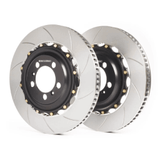
Honda Rear Brake Rotor 42510-TGH-A00 - FK8/FL5 Civic Type R, DE5 Integra Type S & Prelude
The rotor is the surface your brake pad actually clamps, and its job is twofold: give the pad something consistent to bite, and soak up and shed the heat that braking creates. On the Type R and Integra Type S, the rear rotors earn their keep harder than almost any other car's, and that's the thing to understand before you buy. This is the genuine Honda replacement, the exact rear rotor your car rolled off the line with.
Why Your Rear Rotors Wear Out So Fast
If your rear brakes are already worn and the car doesn't have big miles, you're not imagining it and you didn't do anything wrong. These cars use the rear brakes constantly, not just when you press the pedal. To sharpen turn-in and manage grip, the chassis quietly applies the inside rear brake through corners during everyday driving, helping rotate the car. You never feel it, but the rear pads and rotors do, and they wear out surprisingly early because of it, sometimes in as little as 20,000 miles, even on a car that never sees a track. So rear rotors on these cars are a more frequent service item than most owners expect. It's smart to replace the rotors and pads together, and to keep an eye on the rears far earlier than you would on a normal car.
Blank Rotors, and Why That's the Right Call
These are blank rotors, meaning smooth-faced, with no cross-drilling or slotting, and that's a feature, not a shortcoming. There's a common assumption that drilled or slotted is automatically better, but for a street-driven car that sees the occasional track day, a quality blank rotor is the smarter, more durable choice. A blank face gives you full, uninterrupted pad contact and more material to absorb heat, and it isn't fighting the stress risers that drilled holes create. Drilled rotors, in particular, can develop cracks radiating from the holes under the heat cycling these hard-working rear brakes see. A smooth OEM rotor runs quiet, wears your pads evenly, and holds up. It's exactly what Honda engineered for this car, and for how most of these cars are actually driven, it's what you want.
Why Genuine OEM
A rotor isn't just a hunk of steel. The metallurgy, the dimensions, the hat height, and the internal vane design all matter, and all of it is matched to your caliper, your pads, and the car's ABS and stability tuning. This is the genuine Honda part, so every one of those details is correct, and the rear brake balance and feel stay exactly as designed. Pair it with the genuine rear pads and you've put the rear brakes back precisely how they left the factory.
Install Notes
This rotor is sold individually, so order two if you're doing both sides, which you should, because rotors are replaced as an axle pair. Fresh rotors deserve fresh pads if the old ones are worn, and given how quickly the rears go on these cars, you're often replacing both at once anyway. New rotors usually ship with a protective coating, so clean it off with brake cleaner before install. Once everything's bolted up, bed the brakes in with a series of moderate stops to lay down an even pad transfer layer, and you'll get quiet, consistent braking from the start.
Fitment
- 2017-2021 Honda Civic Type R (FK8)
- 2023-2027 Honda Civic Type R (FL5)
- 2024-2027 Acura Integra Type S (DE5)
- 2026 Honda Prelude
Rear brake rotor. Genuine Honda OEM part 42510-TGH-A00. Sold individually - order two for a complete axle.
FITMENT
2024-2027 Acura Integra Type S
2017-2021 Honda Civic Type R
2023-2027 Honda Civic Type R
2026+ Honda Prelude