

PRODUCT DETAILS
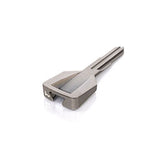
Genuine Honda Clutch Release Fork (22821-P80-010) - B-Series
The release fork is what turns your clutch pedal into clutch movement. It pivots on a ball, pushes the throwout bearing, and does that every single time you shift. On a B-series that's now twenty-five to thirty years old, it's done that job hundreds of thousands of times, and the wear shows up as a pedal that doesn't feel right and a clutch that doesn't fully release.
What A Worn Fork Feels Like
Worth knowing, because fork wear gets blamed on the clutch itself constantly.
Wear happens at the contact points, where the fork meets the pivot ball and where it meets the throwout bearing. As those surfaces wear, part of your pedal travel goes into taking up slack rather than moving the bearing.
What you feel is a clutch that doesn't fully disengage, which shows up as grinding into first from a stop or difficulty finding gears at idle. Sometimes there's a notchy or inconsistent pedal as the fork moves unevenly across worn surfaces.
People chase that with a new clutch, get a small improvement, and still have the problem. That's because the clutch was fine. The thing pushing it wasn't.
Do It With The Clutch
The practical advice worth the most on this page.
The release fork is only accessible with the transmission out, which is nearly all the labor on a clutch job. If you're already in there, replacing the fork costs you a few minutes and no additional access.
Skip it and you're putting a worn fork against a brand new clutch, which means the new clutch never feels as good as it should and you're back under the car sooner than you wanted. On a job that takes a weekend, that's a poor trade for a cheap part.
Grab The Bolt And Spring Too
Both are small parts that finish the job properly.
The release fork bolt (22825-P0S-000) is the pivot the fork works against. It wears alongside the fork, and putting a fresh fork on a worn pivot ball means you've only fixed half the problem.
The release fork spring (22835-P80-000) is what keeps the fork properly seated against the bearing. When it weakens, the fork can rattle and doesn't return consistently.
Both cost almost nothing next to the labor of reaching them, and both wear on the same schedule as the fork itself. There's no sensible reason to reuse either.
Use The Genuine Part
The fork geometry determines your pedal travel and how much the bearing moves for a given input. A part that's close but not exact changes that relationship, which means a clutch that engages somewhere different than it should.
This is the exact part Honda spec'd, and on a component buried behind a transmission it's worth getting right the first time.
Fitment
1994-2001 Acura Integra GS, GS-R, LS, RS, and Type R
1999-2000 Honda Civic Si
1998-2001 Honda CR-V
1994-1997 Honda Del Sol VTEC
Covers B16A2, B16A3, B18B1, B18C1, B18C5, B20B, and B20Z transmissions. Part number 22821-P80-010.
Who Should Grab One
This is for anyone doing a clutch on a B-series who wants the whole release system fresh rather than most of it, and for anyone chasing a clutch that won't fully disengage on a car with a healthy clutch in it. It's inexpensive, it's buried behind a transmission, and it wears just like everything else in there. Grab the bolt and spring with it and do the job once.
Fits: Honda and Acura B16A2, B16A3, B18B1, B18C1, B18C5, B20B, and B20Z, see the application list above. Part number: 22821-P80-010. Type: genuine Honda clutch release fork. Pairs with: release fork bolt (22825-P0S-000) and release fork spring (22835-P80-000).
1994-2001 Acura Integra GS/GS-R/LS/RS
1997-2001 Acura Integra Type R
1999-2000 Honda Civic Si
1998-2001 Honda CR-V
1994-1997 Honda Del Sol VTEC