

PRODUCT DETAILS
PRL Motorsports Titanium Turbo Inlet Pipe - 2016-2021 Honda Civic 1.5T & Si
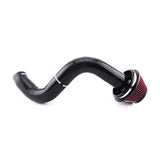
The factory inlet pipe is the last restriction between your intake and your turbo, and it's a bottleneck people overlook because it's buried where you can't see it. PRL's titanium inlet opens that path up dramatically, taking the compressor outlet from the factory 38mm to 45mm and running 74mm ID through the crossover. Thin-wall titanium keeps heat out of the charge, and it bolts on with no tune. Available raw or with a black thermal coating.
Read This First: You Need A PRL Intake
Most important thing on this page. This inlet pipe only works with PRL's Cobra Cold Air Intake or Short Ram Intake. It does not fit the stock airbox, and it won't pair with another brand's intake either.
So if you're still running the factory intake, this isn't a standalone upgrade. You need the PRL intake first, then this. If you've already got the Cobra or the Short Ram on the car, you're exactly who this was built for and it's the natural next step.
Worth being blunt about it because it's the kind of thing that gets discovered with the bumper apart.
Raw Or Black Thermal Coated?
Two versions, and here the finish is more than a look.
Raw titanium is the classic choice. Bare titanium in the bay, which develops color and character as it heat cycles, and it's the traditional statement piece.
Black thermal coated carries a Techline Polyphen Thermal Dispersant coating over the titanium. It's a black chrome-esque finish that looks clean and refined, but the coating does real work: it's engineered to rapidly disperse heat away from the pipe surface and spread it more evenly, on top of the heat resistance the titanium already provides.
So the black version isn't the cosmetic premium option the way it usually is. It's arguably the better-performing one, since the coating actively helps shed heat from the inlet tract. Pick raw if you want the bare titanium look, black if you want maximum thermal management with a finish that hides in the bay.
Why The Inlet Side Matters
Everyone thinks about what happens after the turbo, the charge pipes, the intercooler, the exhaust. The inlet side gets ignored, and it shouldn't.
Your turbo can only compress what it can draw in. Restrict the path feeding the compressor and the turbo works harder for less, which shows up as slower spool and less airflow at the top. The factory inlet is sized for a stock car and becomes a genuine limitation the moment you add boost or open up the intake ahead of it.
PRL's numbers tell the story. The compressor outlet goes from 38mm to 45mm, and the crossover pipe runs 76.2mm OD and 74mm ID. That's a significant increase in volume, and it's sized deliberately for a 1.5 liter engine rather than just made as large as possible, so you keep velocity instead of trading it away for a bigger number.
Why Titanium
Two reasons, and heat is the bigger one.
Thin-wall titanium is a poor conductor compared to aluminum, so it soaks up far less engine bay heat and passes less of it into the air heading for your turbo. Cooler air in means denser air in, which is the whole game on a forced induction car. On a small turbo motor working hard, heat soak in the inlet path is a real and often invisible loss.
The black thermal coating builds on that, actively dispersing heat from the surface rather than just resisting it. Either version manages heat well; the coated one manages it best.
The second reason is that it looks the part. Titanium in a bay is the kind of detail people notice, and on a car where the inlet is visible, that's not nothing.
Cast Aluminum Inlet Piece
The pipe meets the turbo through a cast aluminum inlet that's gasket-matched to the 50mm ID compressor inlet, then transitions smoothly out to the 76.2mm titanium crossover. That transition is where a lot of inlet designs lose their gains, because an abrupt step creates turbulence exactly where you want smooth flow. Casting it lets PRL shape the transition properly rather than working with what tube stock allows.
Multi-Piece Design Makes Install Easier
A one-piece inlet sounds better on paper and is worse in practice. PRL built this in multiple pieces specifically so it fits better and installs more easily, since you're working in a tight space and a single rigid piece has to thread past everything at once.
You get high-temp 4-ply silicone couplers and 304 stainless interlocking worm clamps to tie it together, so the joints seal properly and nothing rusts on you.
What's In The Kit
- (1) Cast aluminum inlet piece
- (1) 76mm OD titanium inlet pipe (raw or black thermal coated)
- (2) High-temp 4-ply silicone couplers
- (5) 304 stainless steel interlocking worm clamps
- (4) Vacuum hoses
- (1) Injection molded evap purge fitting
- (2) Buna O-rings
- (1) Bolt
- (1) Wiring harness tie-down
Everything needed to complete the install, including the vacuum and evap plumbing that comes off the factory inlet. PRL's install guide is worth reading before you start.
No Tune Required
Nice bonus on a part this significant. There's no ECU calibration required, so if your car is otherwise stock you can bolt it on and drive. If you're already tuned, mention it to your tuner so they can account for the additional airflow.
Fitment
2016-2021 Honda Civic 1.5T, all variants including Si, 6MT, CVT, RHD, and international
2017-2022 Honda CR-V 1.5T, requires OEM Civic inlet bracket PN 17288-5K8-000
Works with all factory turbochargers. Requires PRL Cobra Cold Air Intake or Short Ram Intake. Does not fit the stock airbox. Select raw or black thermal coated at checkout.
Who Should Run This Inlet
This is for the 1.5T owner who's already running a PRL intake and wants to clear the last restriction ahead of the turbo. Whether the car is tuned, boosted, or just being built properly piece by piece, opening up the inlet path is one of the more meaningful things you can do that most people never get to. Confirm your intake, pick your finish, and let the turbo actually breathe.
Fits: 2016-2021 Honda Civic 1.5T (all variants) and 2017-2022 Honda CR-V 1.5T with OEM bracket 17288-5K8-000. Finishes: raw titanium or black thermal coated (Techline Polyphen Thermal Dispersant). Requires: PRL Cobra Cold Air Intake or Short Ram Intake. Does not fit the stock airbox. Compressor outlet: increased from 38mm to 45mm. Crossover pipe: 76.2mm OD / 74mm ID titanium. Inlet piece: cast aluminum, gasket-matched to the 50mm compressor inlet. Tuning: no ECU calibration required.
2016-2021 Honda Civic EX/EX-T/Sport/Sport Touring
2017-2020 Honda Civic Si