

PRODUCT DETAILS
Ferrea Dual Valve Spring Kit - Honda/Acura K Series
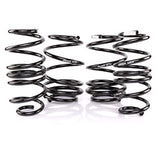
You're installing Skunk2 Stage 3 cams in your K20 and you need valve springs that can actually handle 0.520 inch lift at 8,500 RPM without floating or binding. Your stock springs are done. They've lost preload from 80,000 miles of heat cycles, they can't handle the lift your new cams are throwing at them, and they're going to float before you even get close to the RPM your build's capable of. Ferrea makes two valve spring kits for K series engines: the KT4004 Drag Racing kit and the KT4003 Endurance kit. Here's the difference. The drag kit uses S10100 springs with 105 lbs of seat pressure. That's for aggressive cams with 0.500+ inch lift, for drag racing where you're banging off the rev limiter at 9,000 RPM every pass, and for high-RPM all-motor or turbo builds that need serious spring pressure to keep the valves under control. The endurance kit uses S10099 springs with 80 lbs of seat pressure. That's for road racing, time attack, street/track cars with mild or moderate cams, and builds that need to last an entire race season or 50,000 street miles without losing spring pressure. Both kits come with 16 dual springs, 16 titanium retainers, 16 chromoly seat locators, and 16 valve locks. Everything you need to replace your entire valvetrain.
Here's What Happens When Stock Springs Fail
Stock valve springs fail three ways and all three of them will ruin your day. First is coil bind. You're running a cam with 0.520 inch lift and your stock springs can only handle 0.450 inch before the coils stack on each other and bind up. Now the valve can't open fully, you're losing power, and you're loading up the cam lobes with side pressure they weren't designed for. You bend a valve or you wear out the cam and you're pulling the head. Second is breaking. The springs fatigue from hundreds of thousands of compression cycles at high RPM. The metal gets weak, a coil snaps, the spring breaks in half, and the valve drops into the combustion chamber. The piston hits it on the way up, bends the valve, punches a hole in the piston crown, and now you're rebuilding the whole engine. Third is valve float. This one's sneaky because it doesn't break anything immediately but it kills your power. The spring pressure's not high enough to close the valve fully before the cam comes back around to open it again. You're at 8,000 RPM and the valve's just hanging there half-open. Combustion gases are leaking past it, you're losing cylinder pressure, and the engine's making less power even though you're revving higher. We've seen all three failures on K series engines with stock springs and aggressive cams. It's not a matter of if, it's when.
Drag Kit vs. Endurance Kit - Here's How You Pick
Don't pick the drag kit just because you're building a turbo car. Don't pick the endurance kit just because you're tracking the car. That's not how this works. Here's how you actually decide. If you're running stock cams or mild cams (Stage 1 or Stage 2, usually 0.400-0.480 inch lift) and your car's a street car or a weekend warrior that sees a few track days a year, get the endurance kit. The 80 lbs of seat pressure is plenty for mild cams and it creates less friction on the cam lobes. Less friction means the cams last longer and you're not robbing power to overcome valvetrain drag. If you're running aggressive cams (Stage 3 or race cams, 0.500+ inch lift), if you're drag racing and you're bouncing off 9,000 RPM every pass, or if you're building a high-RPM all-motor engine that lives at 8,500 RPM, get the drag kit. The 105 lbs of seat pressure is there to control the valves when you're throwing that much lift at them at that RPM. Running more spring pressure than you need is bad. It wears out your cam lobes faster, it adds friction, and it robs power. We had a customer run drag springs on a street car with mild cams and he wore out a set of Skunk2 Stage 2 cams in 40,000 miles because the spring pressure was beating up the lobes. The endurance kit would've been fine and his cams would've lasted 100,000 miles.
Dual Springs with Titanium Retainers
Both kits use dual springs. That's an outer spring and an inner spring nested together. They work as a team to give you higher total spring pressure while also dampening harmonics. Harmonics are vibrations that run through the valvetrain at high RPM. If you don't control them, they make the springs resonate and lose effective pressure even though the springs themselves haven't physically weakened. The dual spring setup fixes that because the inner and outer springs vibrate at different frequencies and they cancel each other out. Dual springs also give you a safety net. If the outer spring breaks, the inner spring's still there keeping the valve from dropping into the cylinder. We've never actually seen a Ferrea spring break but if it did happen, you'd limp home instead of grenading the engine. The kits come with titanium retainers. That's the piece that sits on top of the spring and holds it onto the valve. Titanium's way lighter than steel. Less weight up top means less reciprocating mass bouncing up and down thousands of times per minute. The springs don't have to work as hard to control lighter retainers and you get better valve control at high RPM. You can rev higher before you hit valve float.
Seat Locators Set Installed Height - Don't Screw This Up
Both kits come with seat locators and you have to use them. Don't try to reuse your stock seat locators. The drag kit uses SL1053 seat locators and the endurance kit uses SL1052 seat locators. They're not interchangeable. The seat locators set the installed height for the springs. Installed height's the distance from the top of the seat locator to the bottom of the retainer when the valve's closed. The drag kit's installed height is 39mm and the endurance kit's installed height is 40mm. That 1mm difference changes the seat pressure. If you use the wrong seat locators or you try to reuse stock locators, your installed height's going to be off, your seat pressure's going to be wrong, and you might put the springs into coil bind at full cam lift. Measure your installed height after you install the springs. If it's not within spec, you need to shim the seat locators to get it right. This isn't optional. Wrong installed height will cause problems. The valve locks that come with both kits are K10034. They're 10-degree locks. Don't mix them with locks or retainers from other companies unless you've confirmed the keeper angle matches. If you mix a 10-degree lock with a 7-degree retainer, the lock won't seat properly and the valve's going to drop. We've seen it happen. It's ugly.
Titanium Retainers Wear Over Time on Street Cars
The titanium retainers are great for race engines but they do wear. The spring sits on top of the retainer and every time the spring compresses and extends, there's contact between the two. Over tens of thousands of miles, the titanium wears down. It's not a big deal on a race engine that gets torn down every season. You inspect the retainers, you replace them if they're worn, and you move on. On a street car that's going to go 50,000 or 100,000 miles between valve jobs, the titanium retainers might need to be replaced before the springs do. If you're building a street car and you want to set it and forget it, you might want to consider Ferrea's tool steel retainers instead (part number E20044, sold separately). They're heavier than titanium but they last longer. For a race engine or a high-RPM build that gets refreshed regularly, stick with the titanium retainers. The weight savings are worth it.
Ferrea vs. Cheaper Springs - Here's the Difference
Ferrea springs cost about twice as much as Supertech springs. Supertech's SPR-H1021D dual springs work fine for a lot of builds and they're half the price. So why spend the extra money on Ferrea? It comes down to spring pressure retention. Cheap springs lose pressure over time. We've tested this. A cheap spring starts at 100 lbs of seat pressure. After 20 track days or a full drag racing season, it's down to 85-90 lbs. That 10-15% loss is enough to cause valve float at high RPM. Ferrea springs hold their pressure. We've run the same set of Ferrea drag springs through an entire season of time attack racing and the seat pressure at the end of the season was within 2-3 lbs of where it started. That consistency matters when you're pushing the engine hard. Ferrea's also the standard in professional racing. These are the same springs you'll find in Formula 1 engines, Indy Car engines, NASCAR engines, and top-tier drag racing builds. If you're building a budget street car with Stage 1 cams, buy the cheaper springs and save your money. If you're building a serious race engine or a high-RPM all-motor build that's going to see sustained abuse, spend the money on Ferrea. You're buying reliability and consistency.
What You Get
- Ferrea dual valve spring kit for K20/K24 engines (select Drag or Endurance when ordering)
- KT4004 Drag Racing Kit:
- 16 dual valve springs (S10100) - 105 lbs seat pressure @ 39mm installed height, 225 lbs open pressure @ 29mm, 305 lbs/in spring rate, max lift 0.590", max RPM 9,500, coil bind at 22mm
- 16 titanium retainers (E11066) - lightweight for reduced reciprocating mass
- 16 chromoly seat locators (SL1053) - CNC machined 4140 chromoly, nitrided surface, sets 39mm installed height
- 16 valve locks (K10034) - 10-degree cone-style keepers
- KT4003 Endurance Kit:
- 16 dual valve springs (S10099) - 80 lbs seat pressure @ 40mm installed height, lower friction for longer cam life
- 16 titanium retainers (E11066) - lightweight for reduced reciprocating mass
- 16 chromoly seat locators (SL1052) - CNC machined 4140 chromoly, nitrided surface, sets 40mm installed height
- 16 valve locks (K10034) - 10-degree cone-style keepers
- Premium chrome silicon steel springs with heat treatment and stress relief
- Dual spring design controls harmonics and provides safety net if outer spring fails
- Complete kit for all 16 valves (8 intake, 8 exhaust)
Fits These Engines
- K20A2 - 2002-2004 Acura RSX Type S
- K20A3 - 2002-2006 Acura RSX Base, 2002-2005 Honda Civic Si
- K20Z1 - 2005-2006 Acura RSX Type S
- K20Z3 - 2006-2011 Honda Civic Si
- K24A1 - 2002-2006 Honda CR-V
- K24A2 - 2004-2008 Acura TSX
- K24A4 - 2003-2007 Honda Accord
- K24A8 - 2003-2011 Honda Element
Note: Drag kit (KT4004) is for aggressive cams with 0.500"+ lift, drag racing, high-RPM builds (8,500-9,500 RPM), or engines that regularly bounce off the rev limiter. Endurance kit (KT4003) is for mild to moderate cams (up to 0.480" lift), street/track cars, road racing, or builds that need to last 50,000+ miles between teardowns. DO NOT use drag kit seat locators (SL1053) with endurance springs or endurance seat locators (SL1052) with drag springs - they set different installed heights (39mm vs. 40mm) and mixing them will give you wrong seat pressure and possible coil bind. You MUST discard your stock seat locators and use the Ferrea ones included in the kit. Measure installed height after installation and shim if necessary to achieve spec. Requires valve spring compressor tool and you'll need to replace valve stem seals during installation. The K10034 valve locks are 10-degree locks - don't mix them with retainers or locks from other manufacturers unless you've confirmed keeper angle compatibility or you'll drop a valve. Titanium retainers wear over time from spring contact - inspect them periodically on street cars with high mileage or consider Ferrea's tool steel retainers (E20044, sold separately) for long-term street use. Always check valve-to-piston clearance with clay modeling after installing new cams and springs - inadequate clearance will cause piston-to-valve contact at high RPM. Ferrea costs about 2x Supertech but holds seat pressure better over hundreds of dyno pulls or full race seasons - worth it for serious builds, overkill for budget street cars with mild cams.
2004-2008 Acura TSX
2003-2007 Honda Accord
2006-2011 Honda Civic Si
2003-2011 Honda Element