


1/3
PRODUCT DETAILS
BC Racing BR Series Coilovers - 2001-2005 Honda Civic (EM2/ES1/ES2, EP3 Si, EP3R Type R)
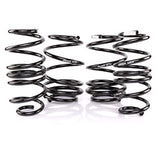
Look at the spring rates on this kit: 6 kg/mm front, 9 kg/mm rear. If you've shopped coilovers for any other Honda, that looks wrong. Every EG, EK, and Integra kit runs a stiff front and a soft rear, and here it's flipped. That's not a mistake, and understanding why tells you everything about what makes your 7th gen Civic different from the Hondas everybody else is building.
Why The Rates Look Backwards
Your car is the generation Honda changed the recipe. The EP3 and EM2 dropped the front double wishbone that made every Civic before it famous and went to a MacPherson strut front end instead, while keeping a wishbone-style rear. That's also why your car shares so much with the DC5 RSX, same thinking, same era.
Here's why that flips the numbers. On a strut front end, the spring sits basically right on top of the wheel, so almost all of that spring rate reaches the tire. On the old wishbone setup, the spring mounts inboard on the control arm, so the wheel moves further than the spring does and you lose a big chunk of the rate before it ever gets to the ground. That means a wishbone car needs a much stiffer spring just to end up with the same effective stiffness at the wheel. Your rear is still wishbone, so it needs that 9 kg. Your front is a strut, so 6 kg gets there without help. Put them together and the car is balanced, it just doesn't look like it on paper.
This is exactly what BC means when they say they test each application instead of shelving one spec across a whole brand. Somebody who doesn't know your chassis would look at 6 kg front and call it soft. It isn't. It's correct.
Front Camber Plates, Which Your Car Genuinely Needs
This kit uses Type RA pillowball camber top mounts, and on a strut car that's not a luxury. Strut suspension gains negative camber fast when you lower it, faster than a wishbone setup does, and your factory front end gives you nothing to correct it with. So people drop an EP3, drive it a season, and then find the inside edges of their front tires worn down to the cords wondering what happened. Built-in camber adjustment lets you pull it back to something sane, or dial in deliberate negative camber if the car sees track time. Your call, and it's an easy one to make when you can actually make it.
The pillowball mount does two jobs, too. It's a solid connection rather than squishy rubber, so steering feel gets sharper and the front responds right now instead of a beat later. Honest trade: a pillowball transmits more road noise into the cabin than a rubber mount would. That's the cost of the precision, and most people building an EP3 think it's a bargain.
Standard Or Extreme Low
Two versions, and the choice is just how far down you want to go:
- Standard. Roughly an inch below stock at its highest setting, down to about 2.5 to 3 inches below at its lowest. The right pick if the car's a daily and you'd like to keep using driveways.
- Extreme Low. Starts about 2 inches below stock at the top of its range and goes to roughly 4 inches below at the bottom. For when the Standard kit's lowest setting still isn't what you had in mind.
Adjust The Height Without Killing The Ride
On the BR Series, ride height adjusts independently of spring compression. You lower the car by moving the lower mount, not by winding the spring down onto itself, so your suspension keeps its travel and the damper keeps doing its job. On a strut car that matters even more than usual, because you're already working with less suspension travel than a wishbone car had, and collapsing what's left is how you end up with something that bottoms out on every driveway. Do it right and the car sits where you want and still drives.
Thirty Clicks, One Knob
You get 30 clicks of compression and rebound, adjusted together, so tuning the car takes about ten seconds a corner. Soften it for the commute, firm it up for a track day or a canyon run, and go back Monday morning. That's a lot of range for the money, and it's the reason the BR Series is where most people start.
Built To Be Rebuilt
Mono-tube shocks with a linear piston and damping curve, so the damping stays predictable through the whole stroke instead of getting strange at the extremes. Two-year warranty against manufacturer defect. And they're fully rebuildable, so when they finally wear out you refresh them instead of replacing them. Custom spring rates, Swift springs, and custom valving matched to your rates are all available if you want to go further.
What You Get
- BC Racing BR Series coilovers for the 2001-2005 Honda Civic (EM2/ES1/ES2, EP3, EP3R)
- Available in Standard or Extreme Low
- Type RA pillowball camber top mounts up front
- 6 kg/mm front and 9 kg/mm rear spring rates, matched to the strut front and wishbone rear
- 30 clicks of simultaneous compression and rebound adjustment
- Height adjustment independent of spring compression
- Mono-tube shock design with a linear piston and damping curve
- Custom spring rates, Swift springs, and custom valving available
- Fully rebuildable
- 2-year warranty against manufacturer defect
Fits These Cars
- 2001-2005 Honda Civic DX/EX/LX (EM2/ES1/ES2)
- 2002-2005 Honda Civic Si (EP3)
- 2001-2005 Honda Civic Type R (EP3R)
Note: Available in Standard and Extreme Low versions. Fully rebuildable and backed by a 2-year warranty against manufacturer defect. One coilover set per order.
2001-2005 Honda Civic DX/EX/LX
2002-2005 Honda Civic Si
2001-2005 Honda Civic Type R