

PRODUCT DETAILS
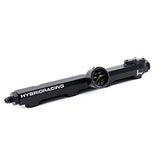
AEM Fuel Pulse Damper - 6AN ORB
Are you running upgraded injectors and a high-flow fuel pump and your fuel pressure's bouncing all over the place? Every time an injector fires, it sends a pressure pulse through your fuel rail. Those pulses make your fuel pressure swing between what your pump's putting out and what your regulator's set at. That inconsistency screws with your injector spray pattern and you're getting uneven combustion. The AEM fuel pulse damper smooths out those pressure spikes so your fuel pressure stays rock solid. You're getting consistent spray patterns and your fuel table actually works the way it's supposed to. This damper handles 40-100 PSI so it covers most street and performance applications.
Here's Why Your Fuel Pressure's Bouncing
When an injector opens and closes, it sends a shockwave through the fuel rail. Think of it like slamming a faucet closed in your house - you hear the pipes bang. Same thing's happening in your fuel rail but way faster because injectors are opening and closing hundreds of times per second. Those shockwaves create pressure spikes. Your fuel pressure gauge might say 58 PSI but it's actually swinging from 55 to 62 every time the injectors fire. That pressure variation changes how much fuel comes out of the injector. Your spray pattern's inconsistent and your combustion's all over the place. The fuel pulse damper absorbs those shockwaves. It uses a diaphragm inside that flexes when pressure spikes hit it. The result's smooth, steady fuel pressure that doesn't bounce around.
When You Actually Need This
If you're running a stock fuel system with stock injectors, you probably don't need a pulse damper, though some older Honda/Acura chassis did use one, especially those with B, D, F, or H Series engines. OEM fuel systems are designed to handle the pressure pulses from factory injectors. But the second you start upgrading, bigger injectors, high-flow fuel pump, increased fuel pressure, those pulses get worse. Big injectors flow more fuel so they create bigger pressure swings. High-flow pumps push more volume so the shockwaves hit harder. Racing applications benefit the most because you're chasing precise fuel delivery at high power levels. Even on a street car with an upgraded fuel system, a pulse damper improves idle quality and cold start. Your ECU's not fighting pressure swings when it's trying to dial in idle fuel.
6AN ORB Fittings
The AEM damper uses 6AN ORB fittings. ORB stands for O-Ring Boss. It's a straight thread fitting that seals with an O-ring. You're not dealing with tapered NPT threads that can leak or crack. The damper's got female 6AN ORB ports so you thread in male 6AN ORB fittings or adapters. 6AN works with most common fuel line sizes for street and performance applications. There's also a 1/8" NPT port on the body so you can install a fuel pressure gauge or pressure sensor right on the damper. You're monitoring fuel pressure where it matters.
What You Get
- AEM fuel pulse damper (40-100 PSI)
- 6AN ORB female ports (O-Ring Boss straight thread)
- Diaphragm design absorbs pressure pulses
- Billet aluminum construction
- Stainless steel internal springs
- Fluorosilicone diaphragm compatible with all fuels
- 1/8" NPT gauge port
Note: Install this damper as close to your fuel rail as possible. The closer it is to the injectors, the better it works at absorbing pressure pulses. You'll need 6AN ORB male fittings or adapters to connect your fuel lines to the damper - those aren't included. Make sure your fuel lines and fittings are rated for your fuel pressure. If you're running E85, verify all your fittings and O-rings are compatible. The damper's fluorosilicone diaphragm works with gasoline, E85, and alcohol fuels. After you install the damper, check for leaks at operating pressure before you start the engine. ORB fittings seal with O-rings so make sure the O-rings are seated properly and you're not cross-threading the fittings.