



Hasport Performance
Hasport Categories


Hasport Performance Engine Mounts: Built for Reliable Honda and Acura Engine Swaps
If you've done a K-swap or B-series swap, you know the name. Hasport's been building engine mounts for Honda and Acura swaps since before it was the cool thing to do.
They started because the available mounts sucked; too much flex, poor quality, or they'd crack after a season of hard use. So they made better ones: mount built around a carefully engineered structure designed for strength and paired with their proprietary urethane bushings. The result? Your engine stays put whether you're daily driving or sending it at the track.
They inspect every mount before it ships. No exceptions. That matters when you're running 400+ hp or when you've got thousands of dollars into a build.
Street car with worn OEM mounts? Track car that needs to handle hard launches? Full swap project? Hasport makes mounts that'll handle it. They've been doing this long enough to get the fitment right and build them strong enough to last.
Why Hybrid Racing Chooses Hasport Performance Engine Mounts
We've been selling Hasport mounts for years because they work, and they work consistently. When you're doing a K-swap or B-series swap, engine placement isn't just about making things fit; it affects your axle angles, clearances, driveshaft alignment, and how the whole drivetrain behaves under load. Get the geometry wrong and you'll spend months chasing weird handling issues, vibrations, or drivetrain problems that don't make sense. Hasport gets it right the first time.
What really separates Hasport from everyone else making engine mounts? They actually understand engine geometry at a level most companies don't bother with. They know exactly how engine position affects weight distribution, how it changes driveshaft alignment under acceleration, and what it does to handling balance. That's not marketing talk; it's the fundamental difference between a swap that drives right from day one and one that always feels slightly off no matter how much you mess with it. When you bolt in Hasport mounts, the engine sits where it's supposed to sit, and everything downstream from that just works.
Built by Swappers, for Swappers
Hasport started the way a lot of good companies start; they were doing customer engine swaps back in the late '90s and kept running into the same problem. The mounts they needed for the swaps they wanted to do simply didn't exist. Nobody was making them. So instead of giving up or compromising on builds, they made their own. They engineered completely new mounting solutions from scratch, which opened up swap combinations that nobody had attempted before because the parts literally weren't available.
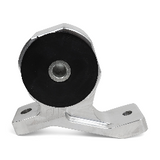
That's how they built their reputation: by solving problems that nobody else was solving. Their billet mounts are CNC'd from 6061 billet aluminum for strength and precision, then paired with their own urethane bushings that they developed specifically for controlling engine movement. The combination of billet aluminum and engineered urethane does exactly what you need it to do: it locks the engine in place without transferring excessive vibration into the chassis or creating the harshness you'd get from solid mounts.
This matters whether you're building a daily driver that sees occasional spirited driving or a dedicated track car that takes abuse every weekend. Your engine stays exactly where it's supposed to be under hard acceleration, heavy braking, and aggressive cornering. Your suspension components can do their job properly without the engine flopping around and disrupting geometry. Your axles stay happy because the angles remain consistent instead of changing dynamically as the engine moves.
What You'll Actually Notice on the Road and Track
Reduced engine movement translates directly into better traction and more predictable handling characteristics. When your engine isn't shifting around in the bay, your suspension can function the way it was designed to. You're not asking your dampers and springs to compensate for a moving mass that's changing the car's dynamics mid-corner. The result is more consistent handling that you can actually trust when you're pushing the car.
You'll feel this most on hard launches. With the engine properly controlled, you get cleaner power delivery to the wheels without wheel hop or traction break. The power goes down smoother because the drivetrain isn't flexing and binding as the engine rocks back and forth. During aggressive braking, the engine stays put instead of lurching forward and upsetting the chassis balance. In corners, you get more predictable turn-in and better mid-corner stability because the weight distribution isn't shifting around.
This isn't just track-day stuff either. Even on street cars, you'll notice improved throttle response and smoother power delivery in normal driving. Your axle angles stay within proper specifications, which means your CV joints last longer and you don't get weird clicking or vibration through the drivetrain. Whether you're running a stock K24 or pushing 500+ hp with a built motor and turbo, Hasport mounts handle it and keep everything working the way it should.
Quality Control That Actually Means Something
Hasport makes every mount in-house at their facility, and they inspect each one before it ships out. They're not just spot-checking random samples; they're verifying geometry, checking fitment tolerances, and confirming bushing placement on every single mount. This catches the small deviations that could cause engine misalignment or create vibration issues down the road.
That inspection process matters when you've got thousands of dollars and dozens of hours into a build. You don't want to discover fitment issues after the engine's already in the car. You don't want to be troubleshooting mystery vibrations three months later because a bushing wasn't seated correctly. Hasport's quality control eliminates those problems before the parts leave their building, which is why we trust them for our customers' swaps and why we run them on our own project cars.
Understanding Bushing Options
Hasport mounts use their own urethane formula, and they offer different bushing durometers so you can match the mount characteristics to how you actually use the car. This isn't about "better" or "worse"; it's about trade-offs and picking what makes sense for your specific application.
Softer bushings work great for street cars and daily drivers. They control engine movement effectively while absorbing vibration and keeping things comfortable. You get the benefits of a proper mount without the harshness. The engine stays in place under normal driving and even spirited acceleration, but you're not dealing with excessive vibration at idle or highway cruise. If you're driving the car regularly, softer bushings make the experience much more livable.
Stiffer bushings lock the engine down more aggressively, which is what you want for track use or cars that see consistent hard driving. They provide maximum control and let you put down power without any engine movement robbing traction. But you'll feel it in the cabin; more vibration at idle, more NVH transmitted through the chassis. Your mirrors will shake. Your passengers might question your choices. It's a real trade-off, not something to gloss over.
The key is being honest about how you actually drive the car. Weekend warrior who tracks it once a month but drives it to work the rest of the time? Probably want something in the middle. Pure track car that gets trailered? Go stiff. Comfortable daily that sees the occasional spirited backroad? Go soft. There's no single "best" option; just what's right for your specific setup and how you use the car.
Warranty Coverage Details
Hasport backs their mounts with a lifetime warranty against defects in materials and workmanship for as long as you own the product. If something fails because of a manufacturing defect or material issue, they'll take care of it. That's straightforward and it's what you'd expect from a quality component.
What's not covered: damage from modifications you make to the mounts, crash damage, misuse, or forcing things during installation. Basically, if you break it by doing something you shouldn't have done, that's on you. You'll need your original receipt for warranty service, and you're responsible for shipping costs to send the part back to Hasport for inspection.
If they find a legitimate defect, they'll repair or replace the mount within thirty days. The lifetime coverage gives you peace of mind that if something goes wrong due to their manufacturing, you're not buying new mounts. But it's not a blanket "we'll replace anything that breaks ever" policy; it's specifically for defects, not damage from use.
K-Series and B-Series Swap Applications
Hasport makes mount kits specifically designed for K-series and B-series engine swaps into various Honda and Acura chassis. These kits determine your engine height, tilt angle, and fore-aft position in the bay; all the geometry that affects how everything else fits together and functions.
Getting engine placement right affects way more than you might think. It determines your axle angles, which impacts CV joint life and drivetrain vibration. It affects shifter cable routing and whether your cables have proper sweep without binding. It dictates header clearance and whether you'll have interference issues with steering components, frame rails, or the firewall. A good mount kit puts the engine exactly where it needs to be so all these other pieces fall into place.
Take the EKK K-swap mounts for '96-'00 Civics with EG/DC subframes, or the EGK mounts for '92-'95 Civics and Del Sols. These kits are engineered with specific geometry that's been proven in thousands of builds. The engine sits at the right height for axle angles, tilted at the correct angle for oil pan clearance and shifter positioning, and located front-to-back so your radiator fits and your header doesn't hit the frame. You're not guessing or making compromises; you're installing a proven solution.
Installation Notes and Best Practices
Before You Start:
Make sure you've got the correct Hasport mount kit for your specific chassis and engine combination. Double-check fitment before you start tearing things apart. You'll need a torque wrench; this isn't optional for aluminum mounting points. Have all the hardware that comes with the kit organized and ready. If you're doing a full swap, consider having alignment tools ready for setting axle angles and checking subframe positioning. Taking the time to prep properly saves you from stopping mid-install because you're missing something.
During Installation:
Hasport mounts are designed for precise engine placement, but you've got to pay attention to the details to get the full benefit. Torque all bolts to the manufacturer's specified values; this matters with aluminum threads and prevents both under-torquing (which allows movement) and over-torquing (which can strip threads or stress the aluminum). Check the alignment of your engine and transmission relative to the subframe before you fully tighten everything down. You want to verify that the drivetrain is sitting square and true.
Verify clearance for your headers, turbo kit if you're running one, and intake components before you call it done. It's way easier to make small adjustments now than after everything's buttoned up and you discover your header is touching the frame rail. Check steering shaft clearance, brake line routing, and any other components that are close to the engine. If something looks tight, it probably is; address it now.
And if you get hung up or want someone to sanity-check your setup, give us a call or book a quick session with one of our in-house swap experts. We do this every day, and we’re happy to help you get it right.
Common Installation Tips:
If you're using raised or lowered mounts to change engine height, be aware that you might need to adjust shifter cable length or modify driveshaft alignment. The cables that worked with your stock motor position might not have the right sweep anymore. Your driveshaft angle might be outside acceptable limits, especially if you've lowered the car or changed engine height significantly.
When you're installing stiff bushings like 88A or 94A durometer, take extra care during installation to avoid putting excessive stress on your subframe and suspension mounting points. These stiff bushings don't forgive sloppy installation; everything needs to be properly aligned before you torque things down. If you force a stiff bushing into place when things aren't lined up, you're preloading stress into the system that can cause problems later.
After installation, inspect your bushings after the first few hundred miles of street driving or after your first few track sessions. Make sure they're seated properly and there's no signs of unusual wear or movement. It's normal for bushings to settle slightly, but you want to catch any issues early before they become bigger problems.
Why Builders Trust Hasport
Hasport's been around long enough and done enough builds that they've earned their reputation the hard way: by consistently delivering mounts that work correctly. Builders and shops use Hasport because the engine placement is predictable and proven. You're not experimenting or hoping things work out; you're using geometry that's been validated in thousands of swaps.
The mounts control engine movement effectively without creating harshness issues that make cars undrivable. They fit properly with other aftermarket components like turbo kits, intake manifolds, and header systems that are common in these builds. You're not dealing with interference problems or having to modify mounts to clear parts. When you spec Hasport mounts into a build, you know the fitment will be right and the quality will be there for the long term.
These mounts perform under real-world conditions; street driving with traffic and potholes, road racing with sustained high-g cornering, drag racing with violent launches, and short track work with constant acceleration and braking. They're not just built for one specific use case. Whether you're building a streetable track car, a drag car that needs to survive the drive to the track, or a daily that sees occasional competition use, Hasport mounts handle the abuse and keep working. That level of versatility and proven durability is why they're a go-to solution for serious builds.
The Origin of Hasport
The story behind Hasport starts in the late 1990s with Brian Gillespie, a skilled engineer and racer, and his brother Keith. They were working at their family business, Honda Auto Salvage, a small operation focused on dismantling and parting out Honda and Acura vehicles. It was honest work but fairly straightforward: buy wrecked or unwanted cars, pull the valuable parts, sell them to people who needed them.
What started as a salvage yard gradually evolved as the brothers recognized where the Honda and Acura scene was heading. The import performance community was growing fast, and people weren't just fixing their cars anymore; they were modifying them, building them, swapping engines into chassis they were never designed for. The demand was there for quality performance components, especially for engine swaps, but the supply wasn't keeping up. Brian and Keith saw the opportunity and started shifting their focus from dismantling cars to creating actual performance solutions.
They began designing and manufacturing their own swap components because the parts they needed for customer builds either didn't exist or weren't good enough. The name Hasport came from that evolution; it's a combination of Honda, Acura, and Motorsport. Simple, direct, and it captured both where they came from (Honda/Acura salvage) and where they were going (motorsports performance). The name reflected their foundation and their passion for racing innovation.
Brian's engineering background and technical expertise guided the product development, while both brothers shared an obsessive attention to detail when it came to fitment and performance. They weren't just making parts that bolted on; they were engineering solutions that actually improved how swaps performed and handled. That combination of technical knowledge, hands-on racing experience, and meticulous quality focus is what established Hasport as a trusted authority in the Honda and Acura tuning world. They built their reputation by solving real problems for real builds, and that foundation still defines how they operate today.
When It Counts: Hybrid Racing Runs Hasport Performance Mounts
In competitive motorsports, reliability isn't negotiable. Every component has to perform under stress, and engine mounts play a direct role in how your car handles and responds when you're pushing it hard. We run Hasport mounts on our race cars because they keep the engine stable under high loads, through sharp cornering, and during aggressive acceleration. The precision in how these mounts position the engine ensures that drivetrain forces get managed properly without compromising performance or stressing the chassis in ways that'll cause problems down the road.
Real-World Testing in Gridlife Touring Cup
Our driver Eric Kutil proves what Hasport mounts can handle in actual competition. Eric races in the Gridlife Touring Cup (GLTC), a series that demands consistent engine performance and predictable handling lap after lap. His K-swapped 1992 Honda Civic EG sedan is built with Japanese Touring Car Championship design influences; low, aggressive, and purpose-built for track work. The car relies on Hasport swap mounts to keep that K24 engine exactly where it needs to be, maintaining proper alignment, managing clearances, and transferring torque effectively while sitting low enough for the handling characteristics Eric needs on track.
This isn't a theoretical application or a dyno queen that looks good in photos. This is a car that gets beaten on at actual race tracks, lap after lap, with real consequences if something fails. The mounts handle sprint races at Road America, Mid-Ohio, and other GLTC venues where Eric's competing against serious builds with serious drivers. When we say these mounts work under stress, we're talking about the kind of stress that comes from 30-minute sprint races with hard braking zones, high-g corners, and full-throttle straights where the engine's trying to twist itself out of the chassis.
Custom-Raised Mounts Solving Real Problems
To fit the tall K24 engine into Eric's ultra-low chassis without compromising ground clearance or oil pan integrity, he runs custom-raised Hasport mounts. These mounts raise the engine approximately three-quarters of an inch higher than standard K-swap mounts. That might not sound like much, but it's the difference between making the setup work and dealing with constant clearance issues.
The additional height solves several challenges simultaneously: oil pan clearance improves so you're not scraping on track surface irregularities, axle angles get corrected to keep CV joints happy under hard use, and subframe alignment stays proper so the whole front end geometry works the way it should. By raising the engine just enough, Eric avoids needing a dry sump system, which would add significant complexity, cost, and maintenance requirements. The setup stays relatively simple and serviceable while still allowing for aggressive cornering and acceleration that would destroy a poorly-mounted engine.
This is the kind of problem-solving that comes from actually using parts in demanding applications. You figure out what works through testing and iteration, not through marketing claims. The raised mounts let Eric run the stance and handling setup he needs for competitive lap times while keeping the drivetrain reliable enough to finish races consistently. That's the balance you're looking for in a real race car; fast enough to compete, reliable enough to actually finish.
Consistency When It Matters Most
Eric's setup survives 30-minute GLTC sprint races at tracks like Road America and Mid-Ohio without issues. That's not easy duty; sprint races mean you're on it hard the entire time, no cool-down laps, no backing off to save equipment. The engine stays where it's supposed to be, which minimizes stress on the mounts themselves, the bushings, and all the drivetrain components connected to the engine.
Axle angles remain within proper tolerances throughout the race, even under heavy braking and aggressive corner exit acceleration. Your suspension geometry functions as intended because the engine isn't flopping around and changing the car's dynamics mid-corner. This consistency is what allows Eric to focus on driving fast and hitting his marks rather than compensating for unpredictable behavior or babying components that might fail.
The result is a K-swap configuration that performs like the engine belongs in that chassis from the factory, but handles race conditions that would overwhelm stock mounting solutions. You get the reliability and predictability of a well-engineered setup combined with the performance advantages of a proper engine swap. When you're trying to run competitive lap times, that consistency is worth everything; you can trust the car to do what you expect it to do, lap after lap.
Not Just for Race Cars
Hasport mounts aren't exclusively for dedicated track cars and competition builds. Daily-driven street cars benefit just as much from reduced engine motion and improved chassis response. The mounts create a solid connection between your engine and chassis that properly manages torque, controls vibration to acceptable levels, and limits motion that can upset handling or cause drivetrain wear.
Street drivers notice more controlled power delivery and fewer surprises in how the car handles during spirited driving. Your engine isn't rocking back on acceleration and then lurching forward under braking. Power goes down smoother because the drivetrain isn't flexing and binding as weight transfers. The car feels more connected and responsive because the engine's position stays consistent.
We recommend Hasport mounts for both high-performance daily drivers and full race builds because the engineering supports that wide range of applications. You're not compromising on quality or performance whether you're building something to drive to work every day or something that'll see track duty every weekend. The same attention to geometry, the same quality materials, the same manufacturing precision; it all applies regardless of how extreme your build is. You just pick the bushing durometer that matches your use case and tolerance for NVH.
The Critical Interface Between Chassis and Powertrain
Engine mounts are the interface between your powertrain and your chassis, and this connection affects way more than people realize. Poorly designed or worn-out mounts allow excessive engine movement, which increases strain on your axles, puts stress on your driveshaft, and disrupts how your suspension components function. Every time the engine rocks back under acceleration or pitches forward under braking, you're loading those components in ways they weren't designed to handle.
Hasport mounts position the engine at a precisely calculated location, controlling tilt angle, height, and fore-aft placement in the bay. This precision directly affects traction because consistent engine position means consistent weight distribution and predictable load transfer. It affects handling because your suspension geometry stays correct instead of being disrupted by engine movement. And it affects serviceability because everything's positioned where it's supposed to be; your headers fit, your intake has clearance, your turbo system doesn't interfere with other components.
When you've got the engine properly mounted, other upgrades become easier to install and more likely to work correctly. Headers bolt up without clearance fights. Intake manifolds fit without hitting the firewall. Turbo systems have the space they need for hot side and cold side piping. You're not constantly fighting packaging issues or making compromises because the engine isn't where it should be. That proper foundation makes every subsequent modification easier and more effective.
Proven in Racing, Trusted by Builders
We choose Hasport mounts for projects where failure simply isn't an option. When you're racing, a mount failure can mean a DNF at best, or serious damage to the engine, trans, and chassis at worst. Racers and track-day drivers rely on these mounts because they've seen them perform under demanding conditions; not just in their own builds, but in hundreds of other builds across different platforms and power levels.
Engine stability improves your confidence as a driver because you know the car's going to behave consistently. You can commit to corners and aggressive throttle application without second-guessing whether the drivetrain's going to do something unpredictable. Vehicle control improves because the handling characteristics stay consistent and you're not fighting dynamic weight shifts from engine movement. And component lifespan improves because you're not putting abnormal stress on axles, driveshafts, and other parts that are expensive and time-consuming to replace.
When a build requires reliability at the highest level, whether that's racing, time attack, or just a street car that you absolutely need to work every day, Hasport mounts provide the engineering quality and manufacturing precision needed to meet those standards. You're buying proven solutions, not experimenting with parts that might work out. That peace of mind matters when you've got significant money and effort invested in a build.
Urethane Bushing Hardness Levels for Hasport Engine Mounts
Hasport engine mounts come with multiple urethane hardness options to match how you actually use your car. You've got 62A, 70A, 88A, 94A, and solid 6061 aluminum inserts to choose from. Each hardness level changes how much your engine moves, how much vibration transfers into the cabin, and how the car responds overall. Picking the right bushing comes down to how you drive the car, what engine you're running, and where you want to land on the control-versus-comfort spectrum.
Street vs Track Bushing Selection
Choosing the right urethane hardness is one of the most important setup decisions you'll make when installing Hasport mounts. Each durometer level gives you a distinct balance of comfort, vibration, and control; you're always trading one for the other, so you need to be honest about what matters most for your build.
The 62A bushing works best for daily driving. You get near-stock comfort levels with minimal vibration transfer into the cabin. Your engine stays controlled compared to worn-out stock mounts, but you're not dealing with harsh NVH that makes every commute miserable.
For drivers who track their car on weekends but still drive it to work during the week, the 70A option provides a firmer, more connected feel without making the cabin excessively harsh. You'll notice the difference compared to 62A when you're pushing hard; sharper response, better control, but it's still livable for daily use.
The 88A bushing is suited for dedicated track cars or high-torque applications where precision matters more than comfort. Fair warning: you'll feel it. More vibration, more noise, mirrors shaking at idle. But if you're launching hard or pulling high-G corners, this is where you want to be.
The 94A is a full race option designed for maximum control during launches or aggressive cornering. This is race-car stiff. Your passengers will question your sanity. But if you're running slicks and competing seriously, this is what you need.
Higher durometer bushings deliver superior engine control but transmit way more vibration through the chassis. That's the trade-off you're making. Hasport recommends 62A or 70A options for daily-driven cars and reserving 88A or 94A setups for competitive builds where you're willing to sacrifice comfort for control. Choosing the right bushing helps you balance comfort, performance, and longevity for both the engine and all the supporting components that have to deal with vibration.
62A Street Urethane; Daily Driver Choice
The 62A urethane option is designed for street use and light road-race applications. It reduces engine vibration significantly compared to stiffer options while keeping the car totally drivable for everyday use. Hasport offers a flangeless version that provides slightly less vibration transmission, though it won't fit all mount applications; check compatibility before ordering.
The 62A bushings work great for drivers who want their engine properly controlled without dealing with excessive noise, vibration, and harshness in the cabin. On daily-driven vehicles, this hardness level keeps power delivery smooth and predictable while maintaining chassis stability when you get on it. Your engine won't flop around like worn stock mounts allow, but you're not turning your Civic into a paint-shaker either.
If you're building a street car that sees occasional spirited driving or track days, 62A is the comfortable choice. You get most of the benefits of proper engine mounting without the downsides that make you regret your decisions during your morning commute.
70A Race Urethane; The Dual-Purpose Sweet Spot
The 70A urethane offers a mid-stiff option for dual-purpose builds that see both street use and occasional track time. It provides noticeably improved engine control compared to 62A without severely impacting comfort for daily driving. You're stepping up in stiffness, and you'll feel that difference, but it's not harsh enough to ruin the car for regular use.
Drivers notice sharper response during hard cornering and aggressive acceleration while dealing with manageable cabin vibration. The engine stays more locked down when you're really pushing it, which means better traction and more predictable handling. At the same time, it's not so stiff that every drive feels like a chore.
One important limitation: high-performance cars launching on slick tires or running sub-11-second quarter miles can push the 70A beyond safe operating limits. At that power level and that level of abuse, you're generating forces that can overwhelm even 70A bushings. We recommend this bushing for vehicles that need a balance between spirited driving and everyday usability, not for serious drag racing or high-horsepower builds that see consistent hard launches.
If you're the weekend warrior who tracks the car once a month but drives it to work the rest of the time, 70A is probably your answer. It's stiff enough to matter on track but livable enough for daily life.
88A Extreme Race Urethane; Serious Track Duty
Hasport's 88A urethane is intended for aggressive track-focused applications and more radical swap setups. It provides near-maximum control over engine movement, drastically reducing unwanted motion under high torque loads and dynamic cornering forces. When you're launching hard or cornering at the limit, the engine basically doesn't move; it stays exactly where you need it.
The trade-off is real: vehicles using 88A bushings will experience significantly increased noise, vibration, and harshness inside the cabin. Your mirrors will shake at idle. You'll feel vibration through the steering wheel and shifter. Passengers will notice and probably complain. This isn't subtle; you're choosing control over comfort, and the comfort penalty is substantial.
This option makes sense for builds where track performance outweighs comfort considerations. If you're trailering the car to events, 88A is fine. If you're driving it on the street regularly, you need to decide whether you can tolerate the harshness. It allows racers and high-performance drivers to maintain traction, keep axle alignment consistent, and get predictable suspension response under demanding conditions. The engine stays planted, which means your suspension can do its job properly without fighting engine movement.
If you're making serious power, running aggressive tires, and pushing the car hard consistently, 88A delivers the control you need. Just understand what you're signing up for in terms of NVH.
94A Most Extreme Race Urethane; Full Race Stiffness
The 94A urethane is the stiffest option Hasport offers before you jump to full solid aluminum inserts. The bold red bushings indicate the high durometer visually; if you see red bushings, you know what you're dealing with. This level provides extremely sharp control over engine movement under extreme loads. The engine basically doesn't move at all.
Vehicles fitted with 94A bushings will transfer significant vibration into the chassis, affecting mirrors, cabin components, and passenger comfort dramatically. This is race-car territory. Your entire car will vibrate. It's intended for builds where maximum rigidity matters more than daily usability or any semblance of comfort. If you're competing seriously and need every advantage, this is the option.
Daily driving with 94A bushings is not recommended, period. Beyond just being uncomfortable, the increased stress on mounts and suspension components from constant vibration can accelerate wear on parts that weren't designed for that level of sustained abuse. Race cars get rebuilt regularly. Daily drivers need to last. The 94A setup assumes you're willing to deal with increased maintenance and shorter component life in exchange for maximum performance.
If you're launching on slicks, running serious power, and competing at a level where engine movement affects lap times, the 94A delivers. But be realistic about whether your build actually needs this level of stiffness or whether you're just making the car miserable to drive without meaningful performance benefits for your use case.
What to Consider When Selecting Bushings
Bushing stiffness directly affects how engine motion gets transmitted to your chassis, and this has implications beyond just what you feel in the driver's seat. Higher durometer bushings transfer more vibration into the chassis, which can cause additional strain on axles, subframes, CV joints, and other drivetrain parts. That vibration energy has to go somewhere, and it's getting absorbed by components that may or may not be happy about it long-term.
Street-driven vehicles benefit from lower durometer bushings like 62A because you get reduced vibration and better comfort without sacrificing proper engine control. You're still way better off than worn stock mounts, but you're not subjecting yourself and your car to unnecessary abuse.
Track-focused cars often require mid to high durometer bushings (70A to 94A) for consistent engine placement, improved traction, and predictable handling under hard acceleration and aggressive cornering. When you're pushing the car to its limits, you need the engine locked down so your suspension geometry stays correct and your power delivery stays consistent. The comfort penalty is the price you pay for that control.
Think honestly about how you actually use the car. Track it once a year and daily drive the rest of the time? Go softer than you think you need. Trailer it to events and beat on it exclusively on track? Go stiffer. Run it hard on the street and track it regularly? Somewhere in the middle. Don't spec race car parts on a street car just because they sound cool; you'll hate driving it and you won't get the benefits that justify the downsides.
Get Expert Guidance
Selecting the correct urethane hardness depends on your specific engine size, vehicle setup, and how you actually drive the car. We offer consultations to help builders match bushings to their chassis and performance goals because there's no universal "best" answer; it depends on your build.
Factors like what engine you're swapping in, your ride height, whether you're running stock suspension or coilovers, your wheel and tire setup, and what kind of track use you're planning all matter for making the right bushing choice. Getting input from someone who's done this before helps you avoid common mistakes like going too stiff for a street car or too soft for a serious track build.
Contacting a technical expert ensures the bushing you choose actually supports your performance needs while avoiding unnecessary wear on components or vibration issues that'll make you regret your setup decisions. We'd rather spend 15 minutes on the phone helping you pick the right parts than have you order the wrong bushings and be unhappy with how your car drives.
Have questions or need help selecting the right bushing? Sign up for a free consult.
Frequently Asked Questions About Hasport Engine Mounts
Are Hasport Mounts Any Good?
Yes. Hasport mounts are the best in the industry.. They're built to lock your engine in place, improve handling, and survive hard street and track use. Builders have relied on Hasport mounts for decades to complete Honda K-series swaps, B-series swaps, and other performance engine conversions because they work consistently and last.
Every mount gets verified through material selection, machining inspection, and final checks before it ships. You're getting parts that have been quality-controlled, not just shipped out the door hoping they're right. That consistency matters when you've got time and money invested in a swap.
What Makes a Mount Kit Essential for Engine Swaps?
The mount kit determines how your engine sits in the chassis: the height, tilt angle, and fore-aft placement. Get this right and everything else falls into place: axle angles work properly, headers clear everything, shifter cables route cleanly, and you can actually service the car without pulling the engine every time you need to change spark plugs.
Hasport’s mounts aren’t copies of anyone else’s. They’re engineered by people who have actually done these swaps for decades and know exactly where the engine should live for reliability, clearance, and drivability. The locations are intentional, tested, and refined not guessed or borrowed.
Without a quality mount kit, even a technically sound engine swap can create problems. You'll deal with driveline stress from bad axle angles, exhaust interference from poor positioning, or just general installation headaches that make you question your life choices. Hasport K-series kits like the EKK for '96-'00 Civics with EG/DC subframes and the EGK for '92-'95 Civics and Del Sols use a dual-height design that keeps cylinder heads aligned properly.
This design ensures that headers, intake manifolds, and turbo kits fit correctly across both K20 and K24 engine configurations. You're not fighting clearance issues or discovering that your header hits the frame rail after everything's bolted in. The mount kit puts the engine where it needs to be so all your other parts work the way they should.
How Does Hasport Determine Engine Placement?
Hasport uses CAD (computer-aided design) to position engines and transmissions for optimal axle alignment, ground clearance, and hood height before they cut any metal. They're considering accessory clearance, drivetrain angles, and NVH (noise, vibration, harshness) during the development process. The goal is creating a swap that performs like a factory installation while supporting high-performance driving demands.
The CAD-driven engineering approach allows consistent repeatability, which means swaps of the same type will have uniform engine placement and predictable handling characteristics. When you install an EKK kit, your engine sits in the same position as everyone else's EKK kit. That consistency means proven solutions; people have figured out what headers work, what intake manifolds fit, what turbo kits clear. You're not pioneering unknown territory every time.
Who Leads Hasport's Product Development?
Brian Gillespie, founder and technical lead, oversees development and engineering at Hasport. He's got decades of experience in Honda engine swaps and racing applications, so the mounts address real-world installation challenges instead of theoretical problems. His racing background ensures the mounts support competitive performance, not just look good in photos.
Brian also creates technical content through VTEC Academy, providing guidance to builders worldwide who are tackling swaps and performance builds. His input informs bushing selection decisions, ensures service accessibility on installed engines, and confirms part compatibility; all crucial considerations for both street cars and track setups. When you're using Hasport mounts, you're benefiting from someone who's actually done this work hundreds of times, not just designed parts on a computer.
What Are the Bushing Options for Street and Track?
Hasport mounts offer multiple urethane hardness levels so you can tune engine control and NVH for how you actually use the car. Options include 62A for street comfort and daily driving, 70A for dual-purpose street and track use, and stiffer options like 88A or 94A for aggressive track work or launch-focused builds where you need maximum control.
Both flanged and flangeless inserts are available depending on the specific mount design and application requirements. Flanged inserts work in most applications, while flangeless versions reduce vibration slightly in certain mount configurations; check compatibility for your specific setup.
Choosing the right durometer affects engine motion, vibration transfer into the cabin, and overall drivability. Go too soft and you might not get the control you need on track. Go too stiff and you'll hate driving the car on the street. Pick based on your actual use case, not what sounds cool or what your friend runs on their completely different build.
Why Should You Avoid Knockoffs?
Non-genuine mounts might look similar at first glance, but they often fail to meet geometry and tolerance specifications that actually matter. Small differences in bushing centerline location or bracket height can cause axle bind, exhaust interference, or unwanted vibration that only shows up under load when you're actually driving hard.
You can identify fakes through visual inspection and comparing them to known genuine parts. Look at the finish quality, check the markings and logos, examine the machining quality. Knockoffs usually reveal themselves through inconsistent anodizing, rough machining, or missing details that genuine Hasport parts have.
For professional-grade engine swaps where you need parts that work correctly the first time, get genuine Hasport mounts from trusted suppliers like us. Saving $50 on knockoff mounts isn't worth discovering clearance or vibration issues after the engine's installed and you're troubleshooting problems that shouldn't exist.
OEM vs Hasport Comparison
Material & Engineering:
OEM mounts use rubber bushings and stamped metal brackets, which flex under high loads and wear out over time. They're designed for stock power levels and normal driving, not performance use.
Hasport uses 6061 billet aluminum brackets and their own urethane bushings, offering predictable engine motion for street or track use. The materials are chosen for strength and consistency under loads that would destroy OEM mounts.
Durability & Reliability:
Hasport mounts maintain proper geometry under torque, hard cornering, and aggressive braking. The engine stays where it's supposed to be, which means consistent axle angles and predictable handling.
OEM mounts or aftermarket knockoffs can allow engine tilt or misalignment under load, causing vibration, stress on axles, and driveline issues that get worse over time. What starts as mild vibration turns into clunking, then CV joint failure if you ignore it long enough.
Performance Benefits:
Reduced engine movement translates directly to better suspension performance, consistent axle angles, and improved traction. Your suspension can do its job without fighting engine motion that's changing the car's dynamics.
Multiple urethane durometer options let you select the right balance of comfort versus stiffness depending on your driving conditions. You're not stuck with one-size-fits-all; you can tune the setup to match your use case.
Do Hasport Mounts Cause Vibration?
Some vibration is normal and expected; how much depends on which bushing hardness you choose. Higher durometer mounts transfer more vibration into the chassis because they're stiffer and don't absorb as much movement. That's the trade-off for better control.
Street-driven vehicles typically perform best with 62A or 70A urethane, which minimizes cabin disturbance while still controlling the engine way better than worn OEM mounts. You'll notice some increase in vibration compared to brand-new OEM mounts, but it's manageable and most people adapt to it quickly.
Track-focused setups often use 88A or 94A bushings, which dramatically improve engine control but increase vibration and noise significantly. Your mirrors will shake. You'll feel vibration through the steering wheel and shifter. It's harsh, but that harshness comes with the control you need for serious track work.
Understanding the trade-offs between control and comfort is essential when you're selecting bushing hardness. Be honest about how you actually drive the car and pick accordingly. Don't spec race-car parts on a street car just because they sound hardcore; you'll regret it every morning during your commute.
Which Mounts Are Best for Daily Driving?
Mounts using 62A urethane provide the most comfortable ride for daily-driven cars. They transfer less engine vibration while maintaining proper control and alignment. You get the benefits of a quality engine mount without the downsides that make you hate your car on the way to work.
Vehicles that see occasional track use might benefit from 70A urethane, which balances street usability with increased support during spirited driving or track days. You'll notice the difference when you push hard, but it's still totally livable for daily use.
High-durometer mounts like 88A or 94A are typically too harsh for daily driving. They transmit significant vibration into the cabin and can accelerate wear on other components due to the constant vibration they create. Unless you're trailering the car to events or genuinely don't care about comfort, stick with softer options for street use.
Can Hasport Mounts Be Used on Older Honda and Acura Vehicles?
Yes. Hasport makes mounts compatible with a wide range of Honda and Acura chassis, including Civics, Del Sols, Integras, and older TSX or RSX models. The kits are engineered to maintain proper alignment, correct spacing, and reasonable service access, making swaps more predictable and less frustrating to live with.
This compatibility ensures that builders working on vintage or early 2000s platforms can achieve performance results similar to what you'd get with newer vehicles. Your '94 Civic can have engine mounting that's just as good as a modern chassis when you use proper parts designed for the application.
How Does Mount Choice Affect Track Performance?
The correct bushing hardness and proper mount placement improve traction, stability, and cornering response when you're pushing the car hard. Mid-stiff or stiff mounts reduce unwanted engine movement during high-speed maneuvers, which translates to more consistent throttle application, reliable axle angles that don't change under load, and improved handling balance overall.
When your engine stays put during hard cornering, your suspension geometry remains correct and your weight transfer happens predictably. You can commit to corners with confidence because the car behaves consistently. Builders often select higher durometer bushings for vehicles intended for time attack, grid racing, or autocross where that consistency and control matter for competitive lap times.
The engine control you get from proper mounts affects everything downstream: how much grip your tires can generate, how predictable your car feels at the limit, how quickly you can apply throttle on corner exit. It's one of those foundational modifications that makes everything else work better.
Where Should You Start With Hasport Mounts?
Begin by browsing Hasport's full catalog here at Hybrid Racing. Kits are organized by chassis type, engine configuration, and intended use, making it easier to find what fits your specific build. Don't just guess; we offer technical guidance to help match mounts and bushings to your individual setup.
Consulting an expert before you buy reduces installation issues and ensures the mounts you select actually meet your performance expectations. We'd rather spend 15 minutes helping you pick the right parts than have you order the wrong kit and deal with returns or discover fitment issues after you've already started the install.
If you're not sure which kit you need or which bushing hardness makes sense for your build, reach out. We've done this enough times to help you avoid common mistakes and get it right the first time.
About Brian Gillespie: Founder and Technical Lead of Hasport Performance
Brian Gillespie is the founder and technical lead of Hasport Performance, a company that's become synonymous with precision-engineered Honda and Acura swap mounts and full chassis conversion kits. His journey started in the late 1990s when he joined his brother Keith at Honda Auto Salvage, a small operation focused on dismantling and reselling Honda and Acura vehicles. When the brothers realized there weren't any reliable engine mounts available for the Honda swaps people actually wanted to do, they combined Brian's engineering expertise with their shared racing experience to design their own solutions. That's how Hasport was born; the name's short for Honda + Acura + Motorsports, which captures exactly where they came from and what they're about.
Over the decades, Brian's work has shaped the Honda swap industry in ways that are hard to overstate. In interviews like Mount Kit Mastery on MotorTrend and Swap Options: Hasport Motor Mounts, his technical insights reveal the meticulous design and testing that define Hasport's approach. Each mount, bracket, and kit gets engineered with exact understanding of engine position, geometry, and performance requirements; a philosophy that comes from years of hands-on experience in both engineering and competition, not just theory.
Brian's career extends far beyond the workshop and the CNC machines. As featured in the Do It For a Living Podcast and SlipAngle Podcast with MotoIQ, he discusses how his passion for racing continues to drive Hasport's engineering philosophy and product development. Brian has competed in iconic motorsport events like the Pikes Peak International Hill Climb, Bonneville Speed Week, and various time attack and drag racing events, testing the limits of the vehicles and parts he helps create. His collaboration with tuners, engineers, and racers worldwide has made Hasport a trusted name that represents the intersection of precision manufacturing, motorsport heritage, and a relentless drive to innovate and solve problems that nobody else is addressing.
Pioneering Solutions for Engine Swaps
Brian identified early on that many builders were stuck improvising with homemade mounts or using aftermarket parts that failed under stress and hard use. These improvised solutions often caused excessive vibration, misalignment issues, or straight-up driveline damage that could've been avoided with proper engineering. Brian responded by developing billet-aluminum mounts paired with Hasport's own urethane bushings, establishing a new standard for engine swap reliability that the industry hadn't seen before.
His approach emphasized getting the geometry correct and maintaining tight tolerances so engines could be transplanted into different chassis without sacrificing proper alignment or drivability. This wasn't about just making something fit; it was about making it fit correctly, so the swap performed like it belonged there from the factory. That attention to geometry and precision is what separated Hasport from people just making brackets and hoping they worked.
Developing Complete Swap Kits
Beyond individual mounts, Brian led the development of complete engine swap kits for Honda and Acura platforms that addressed the entire installation, not just one piece of it. These kits account for motor placement, axle angles, ground clearance, and accessory fitment; all the stuff that can derail a swap if you don't get it right. Each kit was designed to simplify installation while preserving OEM-level alignment and serviceability, so you're not fighting impossible oil filter access or spark plug changes that require pulling the engine.
By considering the entire drivetrain, mounts, and hardware as a complete system rather than individual components, Brian helped builders achieve professional-grade installations with fewer adjustments and setbacks. You're not discovering problems after everything's installed; the kit's designed to avoid those problems in the first place. That systems-thinking approach is what makes Hasport kits work so consistently across thousands of builds.
Public Education and Industry Leadership
Brian also became the public face of Hasport, sharing technical insights through magazine features, online tech articles, and community forums where builders actually hang out and ask questions. He emphasizes understanding how motor placement, axle geometry, and suspension setup affect handling, stability, and drivability; the interconnected nature of all these systems that people sometimes overlook when they're focused on just making an engine fit.
His educational content reaches thousands of builders who rely on his guidance for K-series swaps, B-series conversions, and other Honda engine installations. Brian's contributions to the community reinforce Hasport's reputation as both a technical authority and a trusted resource for builders who want to do things right. He's not gatekeeping knowledge; he's sharing it because better-informed builders make better decisions and complete better builds.
Bringing Production In-House
Under Brian's leadership, Hasport transitioned from outsourcing parts to maintaining full in-house production capabilities. The company now operates CNC mills, waterjet machines, and precision fabrication equipment, giving them complete control over quality from initial design through final assembly and inspection. This isn't just about having fancy equipment; it's about controlling every step of the process so nothing slips through.
This in-house capability allows for rapid prototyping, testing, and refinement of new engine mount solutions without waiting on outside vendors or dealing with quality issues from third-party manufacturers. When Brian needs to test a new design or make modifications based on real-world feedback, they can do it quickly and verify the results before committing to production. That iterative development process ensures that each kit meets exacting specifications and actually works the way it's supposed to in real builds.
Mentorship and Advocacy in the Honda Performance Scene
Over the years, Brian has earned recognition not only as an engineer and businessman but also as a mentor for builders and racers who are tackling challenging swaps or pushing the limits of their builds. He continues to design, prototype, and test new swap options for a variety of vehicles, ranging from classic Civics to modern Honda platforms that present their own unique packaging and engineering challenges.
His philosophy is straightforward: mounts aren't just hardware you bolt in and forget about; they're the foundation that enables projects pushing the limits of what's possible with these platforms. Builders who follow Brian's guidance and use properly-engineered components can transform garage projects into reliable, professional-grade builds that perform consistently rather than creating problems that require constant troubleshooting and fixes.
Lasting Impact on Engine Swaps
Brian Gillespie's career has fundamentally shaped the Honda and Acura performance market and how people approach engine swaps in these platforms. By combining engineering rigor, practical racing experience, and genuine commitment to public education, he's influenced how enthusiasts approach K-series swaps, B-series conversions, and other performance engine installations across multiple generations of chassis.
His work ensures that builders have access to high-quality mounts, complete swap kits, and technical resources that actually help them succeed, creating a foundation for safe, repeatable, and track-capable builds. You're not reinventing the wheel or pioneering untested solutions; you're building on decades of proven development and real-world testing that Brian and the Hasport team have done. That's the legacy he's built: making difficult swaps achievable for builders who have the skills and determination to do the work correctly.
Hasport Engine Mount Warranty Overview
Hasport Performance backs its engine mounts with a lifetime warranty covering defects in materials and workmanship for as long as you own the product. Each mount gets inspected and tested before it leaves their facility to confirm alignment, fitment, and functionality. The warranty reflects Hasport's confidence in their engineering quality and shows they stand behind the parts they sell to builders doing serious engine swaps.
What's Covered
The warranty covers failures directly caused by material flaws or manufacturing defects; basically, if Hasport screwed up in materials or production, they'll take care of it. Hasport will repair or replace any mount found to be defective within 30 days of inspection at no cost to you. This policy lets builders and racers focus on installation and performance without worrying about unexpected part failures caused by production issues that shouldn't have happened in the first place.
If the mount fails because of something wrong with how it was made or the materials used, that's on Hasport and they'll handle it. That's straightforward and it's what you'd expect from quality components backed by a company that's confident in their manufacturing.
What's Not Covered
The warranty doesn't cover damage caused by abuse, misuse, modification, or excessive force during installation or operation. If you crash the car, force something during install, or modify the mounts and they fail, that's not a warranty issue; that's on you. Consequential and incidental damages resulting from mount failure are also excluded, meaning if a mount fails and causes other damage, Hasport's not covering those other parts.
You need to follow proper installation procedures and torque specs to keep your coverage valid. Don't skip steps, don't force things that don't want to go, and don't modify the mounts. You'll need your original proof of purchase to process any warranty claim, so keep your receipt or order confirmation somewhere you can find it later.
How the Warranty Process Works
If you need warranty service, you'll need to return the mounts to Hasport for inspection. You're responsible for shipping costs to send them back; that's standard for warranty returns and keeps the process straightforward. Hasport inspects the returned parts to confirm there's actually a defect and determine what caused the failure before they commit to repair or replacement.
Once they've confirmed it's a legitimate warranty issue caused by manufacturing defects, they'll complete the repair or send you a replacement and get it back to you promptly. They understand you've got a project waiting and don't want to sit around for months while warranty claims get processed. Turnaround is typically 30 days once they've confirmed the defect.
Why the Warranty Matters
The warranty demonstrates Hasport's confidence in the quality of their mounts and urethane bushings. They're not worried about warranty claims bankrupting them because they know their parts work and last. Builders can rely on the mounts to perform under street driving, track use, and competition conditions without falling apart or failing prematurely.
By backing their products with a long-term warranty that covers you for as long as you own the mounts, Hasport supports proper installation, gives you peace of mind for serious builds, and shows they're committed to quality. Whether you're doing a K-series or B-series engine swap or just replacing worn OEM mounts, you're covered if something goes wrong due to manufacturing defects. That confidence matters when you're investing time and money into a build and need parts you can trust.
Hasport Engine and Transmission Mounts Overview
Hasport Performance offers a comprehensive range of engine and transmission mounts for Honda, Acura, and select aftermarket swap applications. These mounts work for both daily-driven vehicles and track-focused builds, covering K-series, B-series, D-series, H-series, J-series, and L-series engines across a wide variety of chassis, including Civic, Integra, Accord, CR-Z, RSX, Fit, Prelude, and S2000. You can find both complete mount kits and individual components, letting you do exact replacements, prep for swaps, or upgrade performance on your existing setup.
Replacement and Stock Engine Mount Kits
For newer platforms like the '22+ Civic and '23+ Integra, Hasport offers FERR replacement rear mounts and stock replacement engine mount kits that restore factory-level performance and proper alignment. Older Civic and Integra models are covered with complete mount kits for '12-'21 Civics, '88-'00 Civics, '86-'89 Integras, and '90-'93 Integras, including options tailored specifically for Si, Type R, and AWD configurations.
Each kit is designed to maintain proper engine position, keep axle alignment correct, and work with headers, turbo kits, and transmission linkages without creating clearance fights. If you're replacing worn OEM mounts or upgrading to something that'll actually last under performance use, these kits put the engine where it needs to be and keep it there.
K-Series and B-Series Swap Mounts
Hasport's K-series and B-series swap mounts provide the foundation for engine conversions that actually work correctly. Popular options include EKK and EGK mounts for '92-'00 Civics, H/F series mounts for mid-'90s Civics and Integras, and AWD conversion mounts for '92-'01 Integras. These are proven setups used in thousands of builds, not experimental solutions you're testing for the first time.
For performance builders tackling challenging packaging situations, Hasport also makes raised-height mounts, lean-angle mounts, and specialized subframe mounts that accommodate high-clearance swaps or track-oriented setups where you need the engine positioned differently than standard swaps. Each kit includes billet-aluminum brackets and Hasport's own bushings engineered to handle dynamic loads while keeping the engine centered and stable under hard use.
H-Series, D-Series, J-Series, and L-Series Options
Hasport supports H-series swaps for '94-'97 Accords, D-series mounts for '84-'87 Civics and CRX models, J-series mounts for select '88-'01 Civic and Integra applications, and L15B turbo swap mounts for modern Civics and Integras. These mounts get paired with hydraulic or cable transmission mounts as required for your specific application, ensuring reliable driveline
alignment and smooth shifting even under high torque loads that would stress inferior mounts.
Whether you're doing a less common swap that needs specific solutions or working with older platforms where finding quality parts is difficult, Hasport's got coverage across the Honda and Acura lineup. You're not limited to just the most popular K-swap and B-series applications.
Individual Components and Accessories
Beyond complete kits, Hasport offers individual mounts and brackets for nearly every model and series. This includes rear mounts, left-hand and right-hand engine mounts, upper torque mounts, transmission mounts, shift linkages, rear differential mounts, and skid plates with alternator relocation options. If you only need to replace one specific mount or you're building a custom setup, you can get individual components instead of buying an entire kit.
Urethane bushing inserts are also available separately, giving you the ability to fine-tune NVH, engine movement, and ride quality based on your use case. Want to try stiffer bushings without buying new mounts? You can swap just the inserts. Need to replace worn bushings after years of use? You don't have to buy complete new mounts; just get new inserts and keep running what you've got.
Performance and Reliability
Each Hasport mount is CNC'd from 6061-T6 billet aluminum and paired with high-quality urethane bushings that actually last. You can select from multiple durometer options to match street comfort, dual-purpose use where you're splitting time between street and track, or aggressive track conditions where you need maximum control and don't care about cabin vibration.
Hasport's mounts maintain precise engine placement, improve axle alignment so your CV joints stay happy, and accommodate OEM or aftermarket accessories without forcing compromises. You're not fighting clearance issues with headers, intake manifolds, or turbo kits because the engine's positioned correctly from the start. That proper foundation makes everything else easier.
Technical Specifications
Hasport mounts are built to meet the demands of modern Honda and Acura performance applications where stock mounts would fail quickly. Each mount is machined from 6061-T6 billet aluminum for strength and precision, then paired with Hasport's own urethane bushings available in multiple hardness levels so you can match the setup to your driving style. Every kit includes the necessary hardware and brackets to simplify installation while preserving proper drivetrain geometry that keeps your axles, driveshaft, and transmission happy.
This approach delivers consistent performance across a wide range of platforms without sacrificing fitment or making the car impossible to service. You're not giving up oil filter access or spark plug changes just to get proper engine mounts; Hasport considers serviceability during the design process so you can actually maintain the car without pulling the engine every time.
Hasport offers solutions for nearly every major Honda and Acura powertrain configuration, including K-series, B-series, H-series, D-series, J-series, and L-series engines. Supported chassis include the Civic, Integra, Accord, CR-Z, RSX, Fit, Prelude, and S2000 across multiple generations. Whether you're doing a K-swap into a classic hatchback or building a reinforced setup for a boosted street car pushing serious power, Hasport's product range covers the full spectrum of builds from mild to wild.
The engineering behind each kit comes from real-world testing and actual competition use, not just theoretical design work or computer simulations. Hasport mounts reduce unwanted engine movement that disrupts handling, improve traction by keeping weight transfer predictable, and help maintain proper alignment across demanding conditions. You benefit from a cleaner installation process with fewer trial-and-error adjustments and more predictable vehicle dynamics, both on the road during daily driving and under race conditions where consistency matters.
Browse and Shop
You can explore our full Hasport catalog here, with direct links to product pages for rear mounts, stock replacement kits, swap mounts, transmission mounts, and specialized engine brackets. Whether you're replacing worn mounts on a stock car or performing a full engine swap that requires a complete kit, Hasport provides the parts, engineering expertise, and technical guidance to complete builds confidently and correctly the first time.
Expert Consultation and Support
Choosing the right engine mounts can make or break a swap or performance build. If you're not sure which setup fits your goals best, we offer free consultations with technical experts who know every Hasport application inside and out. This service helps you get clarity on chassis compatibility questions, which bushing durometer makes sense for your use case, and what mount configuration you actually need for your specific build.
When you schedule a consult, it helps to share information about your vehicle's current setup, what engine you're running or planning to swap in, and how you actually use the car. A street-driven Civic that sees occasional spirited driving will benefit most from 62A bushings that keep things comfortable. A K-swapped Integra you're building specifically for autocross might call for 70A or 88A bushings that provide more control at the expense of some comfort. The goal is identifying the ideal balance of comfort, control, and reliability before you start the installation and commit to parts that might not match your actual needs.
Our technical team works closely with Hasport to provide accurate recommendations backed by years of testing and real product knowledge, not just reading spec sheets. We've seen what works and what doesn't across hundreds of builds. Builders who start with the right information avoid unnecessary fitment issues, don't waste money on parts that don't match their setup, and get the most out of their Hasport mounts both on the street and at the track. A 15-minute conversation up front saves hours of troubleshooting later.
Ready to get started? Schedule your free consultation and let's figure out exactly what your build needs.
