





PRODUCT DETAILS
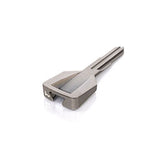
SpeedFactory K Series Copper Exhaust Manifold Gasket
If you're bolting a turbo manifold to your K20 or K24, the exhaust manifold gasket is the cheapest part in the whole system and the first one to quit. Composite gaskets that live fine behind a stock manifold will burn through and blow out once you add boost-level exhaust temperatures and drive pressure. This SpeedFactory copper exhaust manifold gasket (part number SF-02-251) exists for exactly that job: turbocharged, drag, and hard-driven K series builds where the stock-style gasket keeps failing.
What It Is and Why It Works
The gasket is stamped from 0.039 inch (1.0mm) solid copper with 0.061 inch (1.55mm) embossed sealing rings around each exhaust port, for a total thickness of 0.100 inch (2.55mm) at the ports. The embossments crush down and conform to the small imperfections in your head and manifold flange, concentrating clamp load right where the seal happens. Copper also moves heat far better than composite material, so instead of building a hot spot and burning through, the gasket spreads the heat across the flange. That's why copper is the default choice on serious turbo builds, and why SpeedFactory rates this one as reusable through repeated heat cycles, per manufacturer.
One gasket seals one engine. It fits the standard K series exhaust flange, which means it doesn't care whether there's a factory manifold, a header, or a turbo manifold on the other side, as long as the flange matches the K20/K24 port pattern.
Specs
| Part number | SF-02-251 |
| Material | Solid copper, 0.039 inch (1.0mm) |
| Sealing rings | 0.061 inch (1.55mm) embossments at each exhaust port |
| Total port thickness | 0.100 inch (2.55mm) |
| Reusable | Yes, per manufacturer |
| Quantity | 1 gasket |
What to Know Before You Buy
Copper seals on clamp load and flat surfaces, so check both flanges before install. If your turbo manifold flange is warped from heat cycles, have it decked first; no gasket fixes a banana-shaped flange. Install with the flat side against the cylinder head and the embossments toward the manifold, torque from the center outward in a criss-cross pattern, and repeat until the embossments stop compressing. Then, and this is the step everyone skips, re-torque after the first full heat cycle once everything has cooled. Most "my copper gasket leaks" stories trace back to skipping that re-torque.
Be honest with yourself about whether you need it. On a bone-stock K24 daily with the factory manifold, the OEM Honda metal gasket seals fine and costs less. This gasket earns its money when you're running boost, pulling the manifold repeatedly during a build, or you've already blown out a composite gasket and don't want to do the job a third time. While you're in there, replace your manifold studs; stretched or corroded studs can't hold the clamp load a copper gasket needs, and SpeedFactory makes stainless K series exhaust manifold stud kits for exactly this job.
Fitment
| Years | Vehicle | Engine |
| 2002-2006 | Acura RSX and RSX Type S | K20A3, K20A2, K20Z1 |
| 2002-2005 | Honda Civic Si (EP3) | K20A3 |
| 2006-2011 | Honda Civic Si (FG2, FA5) | K20Z3 |
| 2006-2011 | Acura CSX and CSX Type-S | K20Z2, K20Z3 |
| 2004-2008 | Acura TSX | K24A2 |
| 2003-2007 | Honda Accord (4 cylinder) | K24A4, K24A8 |
| 2002-2006 | Honda CR-V | K24A1 |
| 2003-2011 | Honda Element | K24A4, K24A8 |
It also covers every K swap running these engines, whether that's a K20A2 in an EG, a K24/K20 frank in an EK, or a K swapped DC2, because the seal is at the head flange and doesn't care what chassis it's in. The one to watch out for: the K24Z7 in the 2012-2015 Civic Si uses a different exhaust port flange, so this gasket does not fit that engine. Ninth gen Si owners need the Z7-specific gasket for their manifold.
(1) Exhaust Manifold Gasket